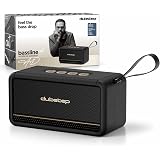
Tired of tinny dialogue, booming explosions that lack impact, and an overall underwhelming audio experience from your flat-screen TV? You’re not alone. While modern TVs boast stunning visuals, their integrated speakers often fall short, leaving a significant gap in your home entertainment. The good news? Bridging that gap is easier and more accessible than ever with the right audio upgrade. This comprehensive guide will navigate you through the world of TV speakers, empowering you to make an informed decision and finally unlock the true potential of your movies, shows, and games.
Understanding Your Audio Needs: The Foundation of Your Upgrade
Before diving into specific speaker types, consider your priorities. What kind of audio experience are you seeking?
- Enhanced Clarity: Do you struggle to understand dialogue? This points towards solutions that prioritize vocal reproduction.
- Immersive Surround Sound: Do you crave the feeling of being in the action, with sounds coming from all directions? This requires a multi-speaker setup.
- Deep Bass and Impact: Do you want to feel the rumble of explosions and the richness of a musical score? Subwoofers are key here.
- Simplicity and Space: Do you have limited space or prefer a minimalist setup? Soundbars offer an elegant solution.
- Budget: This will significantly influence your options, from entry-level soundbars to high-end home theater systems.
The Landscape of TV Speaker Upgrades: A Deep Dive
The market offers a diverse range of audio solutions, each with its unique strengths and weaknesses. Let’s explore the most common and effective options:
1. Soundbars: The All-in-One Simplicity Solution
Soundbars have exploded in popularity due to their sleek design, ease of setup, and significant audio improvement over built-in TV speakers. They are essentially a long, slender speaker enclosure containing multiple drivers that aim to mimic a multi-channel audio experience.
- How they work: Most soundbars house left, right, and center channel drivers. Higher-end models may include upward-firing drivers for Dolby Atmos or DTS:X virtual surround sound, or even rear satellite speakers for a more traditional surround experience. Many come bundled with a wireless subwoofer for enhanced bass.
- Pros:
- Space-saving and aesthetically pleasing: They blend seamlessly with your TV and entertainment center.
- Easy to set up: Typically connect via HDMI ARC/eARC or optical cable.
- Significant audio upgrade: Dramatically improves dialogue clarity, bass response, and overall soundstage.
- Virtual surround sound: Many offer impressive simulated surround effects.
- Cons:
- Limited true surround sound: Virtual surround is not a substitute for discrete rear speakers.
- Bass can be less impactful: Unless a powerful subwoofer is included or purchased separately.
- Driver limitations: The compact nature of soundbars can limit the size and quality of individual drivers.
- Key features to look for:
- Dolby Atmos/DTS:X support: For immersive, object-based audio.
- HDMI ARC/eARC: Essential for seamless audio return from your TV.
- Wireless Subwoofer: For a significant bass boost.
- Rear Speaker Compatibility: For a more authentic surround experience.
- Connectivity: Bluetooth, Wi-Fi for streaming music.
- Voice Assistant Integration: For added convenience.
2. Soundbases (Soundplates): The Under-TV Powerhouse
Similar to soundbars, soundbases are single-unit audio solutions. However, they are designed to sit directly beneath your TV, acting as a pedestal. This design allows for larger drivers and often a more integrated subwoofer, potentially offering better bass performance than some soundbars.
- How they work: They house multiple drivers within a wider, flatter enclosure.
- Pros:
- Integrated bass: Often feature larger, more powerful built-in subwoofers.
- Sturdy design: Can support heavier TVs.
- Simple setup: Similar to soundbars.
- Cons:
- Less common than soundbars: Fewer models available.
- Can be bulkier: May not fit all entertainment centers.
- Limited virtual surround: Generally less sophisticated than high-end soundbars.
3. Home Theater in a Box (HTiB): The Entry-Level Surround Sound Package
HTiBs offer a complete surround sound system in a single box, typically including an AV receiver, five satellite speakers (front left/right, center, surround left/right), and a subwoofer. They are designed for users who want a genuine surround sound experience without the complexity of building a system piece by piece.
- How they work: A central AV receiver decodes audio signals and powers the individual speakers, creating a true surround sound field.
- Pros:
- Complete surround sound solution: Offers a genuine 5.1 experience.
- Relatively affordable: A cost-effective way to get started with surround sound.
- Easy to set up: All components are designed to work together.
- Cons:
- Sound quality can be mediocre: Components are often budget-oriented.
- Limited upgradeability: The included receiver may not offer extensive features or power.
- Speaker quality can be a bottleneck: Satellite speakers are often small and lack detail.
4. Component Home Theater Systems: The Pinnacle of Audio Fidelity
For the ultimate audio experience, a component home theater system is the way to go. This involves purchasing an AV receiver and individual speakers separately, allowing for complete customization and the highest fidelity.
- How they work: A powerful AV receiver acts as the brain of the system, handling audio decoding, amplification, and video switching. You then select individual speakers (floorstanding, bookshelf, center channel, surround, height speakers) and a subwoofer to create your ideal setup.
- Pros:
- Unparalleled sound quality: The ability to choose high-quality components ensures superior audio performance.
- Maximum flexibility and customization: Tailor your system to your exact needs and room acoustics.
- Future-proof: You can upgrade individual components as technology advances.
- True immersive surround sound: Capable of delivering the most convincing Dolby Atmos and DTS:X experiences.
- Cons:
- Most expensive option: Requires a significant investment.
- Complex setup: Requires more technical knowledge and effort.
- Takes up more space: Multiple speakers and a larger receiver.
- Key components of a component system:
- AV Receiver: The central hub, responsible for decoding, amplification, and connectivity. Look for support for the latest audio formats (Dolby Atmos, DTS:X), ample HDMI inputs, and sufficient power output.
- Front Left and Right Speakers: The main speakers, responsible for the primary soundstage and stereo imaging. Floorstanding speakers generally offer more bass and presence, while bookshelf speakers are more compact.
- Center Channel Speaker: Crucial for clear and distinct dialogue. It’s typically placed directly above or below your TV.
- Surround Speakers: Placed to the sides and slightly behind the listener to create the immersive surround effect.
- Height Speakers (for Atmos/DTS:X): Can be in-ceiling, upward-firing (mounted on front speakers), or dedicated wall-mounted.
- Subwoofer: The backbone of low-frequency effects, delivering deep bass and impact.
Understanding Key Audio Technologies and Formats
To make the most of your new speaker system, it’s important to understand the audio technologies that power modern home entertainment:
- Dolby Digital/DTS: Older, but still widely used, surround sound formats that provide discrete audio channels.
- Dolby TrueHD/DTS-HD Master Audio: Lossless audio formats that preserve the full fidelity of the original soundtrack, often found on Blu-ray discs.
- Dolby Atmos: An object-based audio format that adds a vertical dimension to sound. Instead of discrete channels, sounds are treated as individual objects that can be placed and moved anywhere in the 3D space, including overhead. This creates a truly immersive, three-dimensional soundscape.
- DTS:X: DTS’s answer to object-based audio, offering similar immersive capabilities to Dolby Atmos.
- HDMI ARC (Audio Return Channel) / eARC (Enhanced Audio Return Channel): These technologies allow your TV to send audio back to your soundbar or AV receiver through a single HDMI cable, simplifying connections. eARC is a more advanced version that supports higher bandwidth and uncompressed audio formats like Dolby Atmos.
- Virtual Surround Sound: Technologies used in soundbars and some HTiBs to simulate surround sound using psychoacoustic effects and clever speaker placement within a single unit.
Connecting Your New Speakers: Seamless Integration
The method of connecting your new speakers will depend on the type of system you choose:
- Soundbars:
- HDMI ARC/eARC: The preferred method. Connect the soundbar to your TV’s HDMI ARC/eARC port using a high-speed HDMI cable. Ensure ARC/eARC is enabled in

Zebronics 2026 Launch Portable Bluetooth Speaker, 5W RMS, Up to 10Hrs Playback, Passive Radiator, TWS, BT v5.4, USB & mSD, 9 RGB Modes, Splash Proof, Type-C Charging (Sonic POD 15)
₹649.00 (as of October 10, 2026 16:56 GMT +05:30 - More infoProduct prices and availability are accurate as of the date/time indicated and are subject to change. Any price and availability information displayed on [relevant Amazon Site(s), as applicable] at the time of purchase will apply to the purchase of this product.)
Zebronics ZEB-COUNTY 3W Wireless Bluetooth Portable Speaker With Supporting Carry Handle, USB, SD Card, AUX, FM & Call Function. (Black)
₹499.00 (as of October 10, 2026 16:56 GMT +05:30 - More infoProduct prices and availability are accurate as of the date/time indicated and are subject to change. Any price and availability information displayed on [relevant Amazon Site(s), as applicable] at the time of purchase will apply to the purchase of this product.)
Adventure Edition Car Shaped Bluetooth Speaker, 20W Wireless Portable Speaker with HD Sound, Bluetooth 5.0 (Black)
₹849.00 (as of October 10, 2026 16:56 GMT +05:30 - More infoProduct prices and availability are accurate as of the date/time indicated and are subject to change. Any price and availability information displayed on [relevant Amazon Site(s), as applicable] at the time of purchase will apply to the purchase of this product.)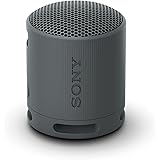
Sony SRS-XB100 Portable Bluetooth Speaker, Extra Bass, IP67 Waterproof & Dustproof, 16 Hr Battery, Hands-Free Calling, Strap – Black
₹2,489.00 (as of October 10, 2026 16:56 GMT +05:30 - More infoProduct prices and availability are accurate as of the date/time indicated and are subject to change. Any price and availability information displayed on [relevant Amazon Site(s), as applicable] at the time of purchase will apply to the purchase of this product.)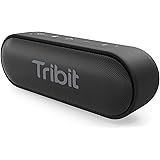
Tribit XSound Go Bluetooth Speaker, 16W, 24H Playtime, IPX7 Waterproof | Bluetooth 5.3, XBass,Portable Design, Enhanced Bass, Built-in Microphone, Hands-Free Calling, Indoor and Outdoor Use
₹2,659.00 (as of October 10, 2026 16:56 GMT +05:30 - More infoProduct prices and availability are accurate as of the date/time indicated and are subject to change. Any price and availability information displayed on [relevant Amazon Site(s), as applicable] at the time of purchase will apply to the purchase of this product.)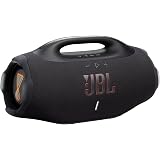
JBL Boombox 4, Wireless Portable Bluetooth Speaker, 34H Playtime Black
₹44,999.00 (as of October 10, 2026 16:56 GMT +05:30 - More infoProduct prices and availability are accurate as of the date/time indicated and are subject to change. Any price and availability information displayed on [relevant Amazon Site(s), as applicable] at the time of purchase will apply to the purchase of this product.)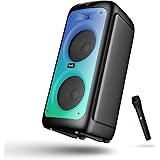
boAt Partypal 390/400 Speaker w/ 160 W Signature Sound, Karaoke with 2 Microphone Input Ports, Up to 6 hrs Playtime, EQ Modes, TWS Mode, Bluetooth v5.3, AUX & USB Type-C Port, Space Black
₹8,999.00 (as of October 10, 2026 16:56 GMT +05:30 - More infoProduct prices and availability are accurate as of the date/time indicated and are subject to change. Any price and availability information displayed on [relevant Amazon Site(s), as applicable] at the time of purchase will apply to the purchase of this product.)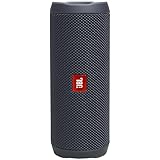
JBL Flip Essential 2, Wireless Portable Bluetooth Speaker with Deep Base, IPX7 Water & Dustproof (Without Mic, Black)
₹4,499.00 (as of October 10, 2026 16:56 GMT +05:30 - More infoProduct prices and availability are accurate as of the date/time indicated and are subject to change. Any price and availability information displayed on [relevant Amazon Site(s), as applicable] at the time of purchase will apply to the purchase of this product.)
PANCA Bluetooth Pillow Speaker for Sleeping, Wireless Under Pillow Sleep Speaker with White Noise, Portable Mini Stereo Music Speaker for Side Sleepers, Bedside Travel Sleep Aid (Blue)
₹499.00 (as of October 10, 2026 16:56 GMT +05:30 - More infoProduct prices and availability are accurate as of the date/time indicated and are subject to change. Any price and availability information displayed on [relevant Amazon Site(s), as applicable] at the time of purchase will apply to the purchase of this product.)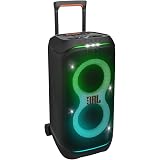
JBL Partybox 320,BITA Award Winner- Best Party Speaker, 240W, AI Sound Boost, Futuristic Light Show, Multispeaker Connection by Auracast, Telescopic Handle & Wheels, Dual Guitar & Mic Inputs (Black)
₹34,999.00 (as of October 10, 2026 16:56 GMT +05:30 - More infoProduct prices and availability are accurate as of the date/time indicated and are subject to change. Any price and availability information displayed on [relevant Amazon Site(s), as applicable] at the time of purchase will apply to the purchase of this product.)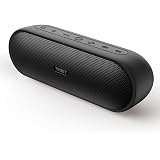
Tribit XSound Plus 2 Bluetooth Speaker, 30W, IPX7, 24H Playtime | XBass, Bluetooth 5.3, Custom EQ, Built-in Mic, Stereo TWS Pairing, for Outdoor, Home, Type-C Charging
₹4,669.00 (as of October 10, 2026 16:56 GMT +05:30 - More infoProduct prices and availability are accurate as of the date/time indicated and are subject to change. Any price and availability information displayed on [relevant Amazon Site(s), as applicable] at the time of purchase will apply to the purchase of this product.)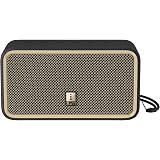
iBall Dhun 120 Portable Bluetooth Speaker, 60W RMS, Upto 6h Playtime, Dual Drivers, Racetrack Neodymium Woofer, Dynamic Bass, TWS, Dual EQ Modes, BT v5.3, Type-C Rechargeable, Metal Mesh Grill (Black)
₹2,999.00 (as of October 10, 2026 16:56 GMT +05:30 - More infoProduct prices and availability are accurate as of the date/time indicated and are subject to change. Any price and availability information displayed on [relevant Amazon Site(s), as applicable] at the time of purchase will apply to the purchase of this product.)
boAt Stone 900 w/ 80W Signature Sound, Up to 15 Hours Playtime, IPX5 Resistant, Type-C Charging, TWS Feature, Built-in Mic, Voice Assistant Portable Wireless Bluetooth Speaker (Graphite Black)
₹4,299.00 (as of October 10, 2026 16:56 GMT +05:30 - More infoProduct prices and availability are accurate as of the date/time indicated and are subject to change. Any price and availability information displayed on [relevant Amazon Site(s), as applicable] at the time of purchase will apply to the purchase of this product.)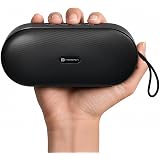
Portronics Spark X 5W HD Bluetooth Speaker with Built-in FM, TWS Mode, Bluetooth 5.3v, Micro SD Card Slot, Up to 5 Hours Playtime, Type-C Fast Charging, Portable Design (Black)
₹649.00 (as of October 10, 2026 16:56 GMT +05:30 - More infoProduct prices and availability are accurate as of the date/time indicated and are subject to change. Any price and availability information displayed on [relevant Amazon Site(s), as applicable] at the time of purchase will apply to the purchase of this product.)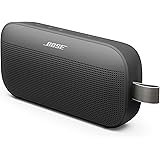
Bose New SoundLink Flex Portable Bluetooth Speaker (2nd Gen), Portable Outdoor Speaker with Hi-Fi Audio, Up to 12 Hours Battery Life, Waterproof and Dustproof, Black
₹9,999.00 (as of October 10, 2026 16:56 GMT +05:30 - More infoProduct prices and availability are accurate as of the date/time indicated and are subject to change. Any price and availability information displayed on [relevant Amazon Site(s), as applicable] at the time of purchase will apply to the purchase of this product.)
Bluetooth Pillow Speaker for Sleeping, Wireless Under Pillow Sleep Speaker with White Noise, Portable Mini Stereo Music Speaker for Side Sleepers, Bedside Travel Sleep Aid (Blue)
Now retrieving the price.
(as of October 10, 2026 16:56 GMT +05:30 - More infoProduct prices and availability are accurate as of the date/time indicated and are subject to change. Any price and availability information displayed on [relevant Amazon Site(s), as applicable] at the time of purchase will apply to the purchase of this product.)
Portable Bluetooth Speaker with Mobile Holder | 5W Loud & Clear Sound | Wireless TWS Pairing | Compact Mini Speaker with Strap | Hands-Free Music Stand for Mobile | Travel Friendly Speaker (Black)
Now retrieving the price.
(as of October 10, 2026 16:56 GMT +05:30 - More infoProduct prices and availability are accurate as of the date/time indicated and are subject to change. Any price and availability information displayed on [relevant Amazon Site(s), as applicable] at the time of purchase will apply to the purchase of this product.)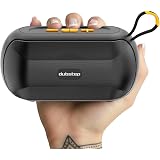
Dubstep Pop 1400 Portable Bluetooth Speaker | 14W Loud Sound, Deep Bass with XBASS, 16 Hrs Playtime, TWS Stereo Pairing, 52mm Driver, Splash-Resistant, Carry Strap (Black)
₹649.00 (as of October 10, 2026 16:56 GMT +05:30 - More infoProduct prices and availability are accurate as of the date/time indicated and are subject to change. Any price and availability information displayed on [relevant Amazon Site(s), as applicable] at the time of purchase will apply to the purchase of this product.)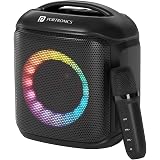
Portronics Apollo Prime 20W Bluetooth Speaker with Wireless Karaoke Mic, RGB LED Lights, Bluetooth 5.3, Up to 5 Hours Playtime, Type-C Charging, USB, AUX & SD Card Support, Easy Grip Handle (Black)
₹1,799.00 (as of October 10, 2026 16:56 GMT +05:30 - More infoProduct prices and availability are accurate as of the date/time indicated and are subject to change. Any price and availability information displayed on [relevant Amazon Site(s), as applicable] at the time of purchase will apply to the purchase of this product.)