
Portable Power: The Rise of Lightweight AR Glasses
The future of computing is no longer tethered to bulky desktops or confined to the flat surface of a smartphone. A quiet revolution is underway, driven by the burgeoning field of Augmented Reality (AR) and, more specifically, the emergence of lightweight, portable AR glasses. These devices, once relegated to science fiction, are rapidly transitioning into tangible tools, promising to redefine how we interact with information, the digital world, and each other. This article delves into the technological advancements, market drivers, and transformative potential of these increasingly accessible AR wearables.
The core innovation enabling this shift lies in miniaturization and power efficiency. Early AR prototypes were often cumbersome, requiring powerful external processing units and generating significant heat. Today, advancements in micro-optics, custom silicon, and battery technology have dramatically shrunk the form factor and weight of AR glasses. Companies are leveraging specialized AR chips that integrate processing, graphics rendering, and sensor management onto a single, low-power die. This not only reduces physical size but also conserves battery life, a critical factor for untethered operation. Furthermore, the development of wave-guide displays, which project digital information onto lenses with remarkable clarity and minimal bulk, has been a game-changer. These optical systems are far more efficient and discreet than their predecessors, allowing for sleeker, more aesthetically pleasing designs that resemble conventional eyewear.
The market for portable AR glasses is experiencing exponential growth, fueled by a confluence of factors. Firstly, the increasing affordability and accessibility of underlying technologies, such as high-resolution micro-displays and advanced sensors, are driving down manufacturing costs. This makes AR glasses a more viable proposition for a broader consumer and enterprise market. Secondly, the sheer utility of AR is becoming increasingly apparent. For professionals in fields like manufacturing, logistics, and healthcare, AR glasses offer hands-free access to critical information, step-by-step instructions, and remote expert assistance, leading to increased efficiency, reduced errors, and enhanced safety. Imagine a technician receiving real-time diagnostics and repair guides overlaid directly onto a piece of machinery, or a surgeon viewing patient vitals and imaging data without diverting their gaze from the operating field.
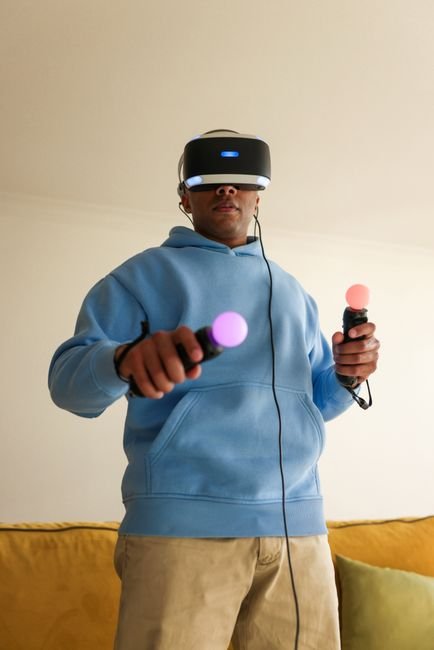
Beyond enterprise applications, the consumer market is also awakening to the possibilities. While fully immersive virtual reality (VR) headsets often demand dedicated spaces and can be isolating, lightweight AR glasses offer a more integrated experience. They overlay digital content onto the real world, augmenting rather than replacing reality. This allows for a more natural and intuitive interaction. Think of navigating a new city with turn-by-turn directions subtly appearing in your field of view, or attending a concert with real-time song lyrics and artist information displayed above the stage. Social AR experiences, where users can share virtual objects and annotations in their physical environment, are also gaining traction, promising new forms of digital interaction and creative expression.
The development of robust software ecosystems is crucial to the widespread adoption of portable AR glasses. Developers are actively creating applications that leverage the unique capabilities of these devices. This includes everything from productivity tools and educational content to entertainment and gaming. The ability to interact with digital elements through gestures, voice commands, and even eye-tracking opens up entirely new paradigms for user interfaces. This natural interaction, often referred to as “spatial computing,” promises to be more intuitive and less intrusive than current touch-based interfaces. The integration of AI further enhances these experiences, enabling devices to understand context, provide intelligent recommendations, and personalize interactions.
However, challenges remain. Battery life, while improving, is still a significant consideration for extended use. The computational power required for complex AR rendering can still strain portable devices. Furthermore, the development of compelling and intuitive AR applications that truly showcase the technology’s potential is an ongoing effort. User comfort and the social acceptance of wearing AR glasses in public are also factors that will shape their trajectory. The “glasshole” stigma associated with early smart glasses needs to be overcome by designs that are fashionable and unobtrusive. Privacy concerns related to the data collected by the sensors within AR glasses also require careful consideration and robust ethical frameworks.
Despite these hurdles, the trajectory of portable AR glasses is undeniably upward. Major technology players are investing heavily in research and development, and a growing number of startups are pushing the boundaries of innovation. The convergence of advanced display technology, powerful yet efficient processing, and intuitive software is paving the way for a future where digital information is seamlessly woven into the fabric of our physical reality. As these devices become lighter, more powerful, and more integrated into our daily lives, they have the potential to unlock unprecedented levels of productivity, creativity, and connection, truly ushering in an era of portable, augmented intelligence. The journey from niche technology to mainstream adoption is well underway, and lightweight AR glasses are at the forefront of this transformative wave.