
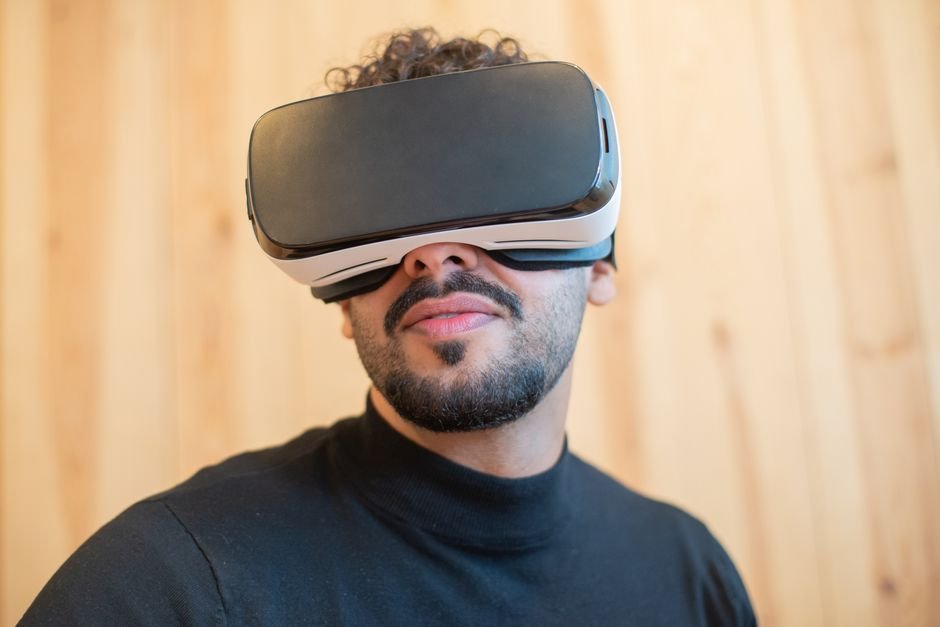
How VR Headsets Work: A Simple Explanation
Virtual reality (VR) headsets are gateways to immersive digital worlds, transforming how we play, learn, and interact. But beneath the sleek design lies a sophisticated interplay of hardware and software that creates the illusion of presence. Understanding the fundamental principles behind VR headset operation demystifies this cutting-edge technology.
At its core, a VR headset’s primary function is to trick your brain into believing you are in a different environment. This is achieved through a combination of visual and auditory stimuli, meticulously synchronized to react to your head movements. The journey begins with the display. Inside the headset, two small, high-resolution screens, one for each eye, are positioned directly in front of your pupils. These screens don’t display a single, flat image. Instead, they present slightly different perspectives of the same virtual scene. This stereoscopic vision is crucial for creating depth perception, mimicking how our eyes naturally see the world from slightly offset angles. The closer the virtual objects are, the more pronounced the disparity between the images shown to each eye.
The lenses are another critical component. Positioned between the screens and your eyes, these lenses serve multiple purposes. Firstly, they magnify the images on the small screens, making them appear larger and filling your field of view. Secondly, and perhaps more importantly, they alter the focal distance. Without lenses, you’d be trying to focus on screens that are only a few inches away, which is uncomfortable and can lead to eye strain. The lenses effectively redirect the light from the screens, allowing your eyes to focus on them as if they were much farther away, typically at an infinite distance, creating a sense of scale and distance within the virtual environment. This also contributes to the immersive feeling, as the virtual world appears to surround you rather than being confined to a small display.
The magic of interactivity lies in tracking. VR headsets employ sophisticated tracking systems to monitor your head’s position and orientation in real-time. This is paramount because if you turn your head left in the real world, your virtual view must instantly update to reflect that movement, looking to the left within the virtual environment. If there’s a delay, known as latency, the illusion is broken, leading to motion sickness and a disengaging experience.
Two primary types of tracking are commonly used: inside-out tracking and outside-in tracking. Inside-out tracking, prevalent in modern standalone headsets like the Meta Quest series, utilizes cameras mounted on the headset itself. These cameras observe the surrounding physical environment, identifying features and patterns. By continuously analyzing the changes in these visual cues as you move, the headset’s internal sensors can triangulate its position and orientation in 3D space. This method is convenient as it doesn’t require external sensors in your room.
Outside-in tracking, historically used in PC-tethered VR systems like the HTC Vive, relies on external base stations or sensors placed in your play space. These base stations emit infrared light or radio signals that are detected by sensors on the headset and controllers. By triangulating the signals received from multiple base stations, the system can precisely determine the headset’s location. While requiring setup, this method can offer extremely high accuracy and a larger tracking volume.
Beyond head tracking, VR headsets also need to track the movement of your hands, typically through controllers. These controllers often feature their own sensors, including accelerometers and gyroscopes, to detect their orientation and movement. In conjunction with the headset’s tracking system, this allows for precise manipulation of virtual objects. Some advanced systems also incorporate hand-tracking technology, using the headset’s cameras to directly monitor the position and gestures of your bare hands, eliminating the need for controllers altogether.
The processing power behind a VR headset is another crucial element. For standalone headsets, a powerful mobile processor, similar to those found in high-end smartphones, is integrated directly into the device. This processor handles rendering the complex 3D graphics for both screens, processing tracking data, and running the VR application. For PC-tethered headsets, the heavy lifting of graphics rendering is offloaded to the user’s powerful gaming PC. The headset then receives the rendered frames and displays them. The speed at which these processors can generate and deliver frames per second (FPS) directly impacts the smoothness and realism of the virtual experience. A higher FPS means more frames are displayed each second, resulting in a fluid and responsive visual experience, further reducing the likelihood of motion sickness.
Audio plays a significant role in immersion, and VR headsets often incorporate integrated headphones or speakers. These are designed to deliver spatial audio, also known as 3D audio. Spatial audio simulates the direction and distance of sound sources in the virtual environment. For example, if a virtual character speaks from your left, the sound will be perceived as coming from your left. This, combined with visual cues, further enhances the sense of presence and makes the virtual world feel more believable and interactive. The audio system works in tandem with the visual and tracking systems, ensuring that what you see and hear are consistently aligned with your actions.
The software ecosystem is the final piece of the puzzle. VR headsets run on specialized operating systems and require VR applications to create the virtual worlds. These applications are designed to be rendered in stereoscopic 3D and respond to real-time tracking data. The software translates your physical movements into actions within the virtual environment, whether it’s walking, reaching for an object, or interacting with characters. Developers use VR development kits (SDKs) and game engines like Unity and Unreal Engine to build these immersive experiences, optimizing them for the specific hardware capabilities of different VR headsets. The constant evolution of software and hardware continues to push the boundaries of what’s possible in virtual reality, making the technology more accessible, realistic, and engaging than ever before.