
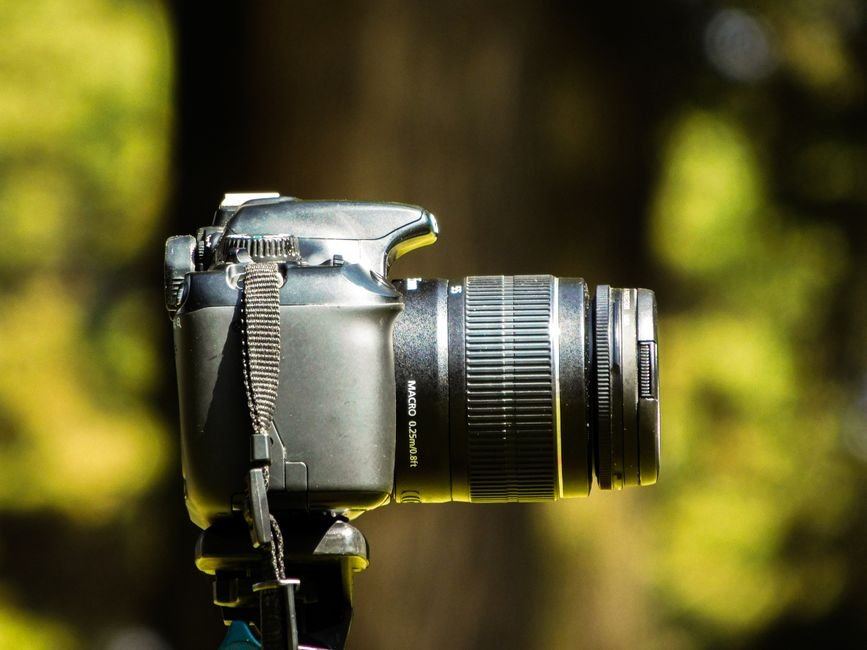
Capture Your Vision: Budget-Friendly DSLRs for Aspiring Photographers Under ₹50,000
Embarking on your photography journey doesn’t require a king’s ransom. The world of Digital Single-Lens Reflex (DSLR) cameras offers a wealth of powerful and versatile options that can ignite your creative spark without emptying your wallet. For aspiring photographers in India looking to invest in their first serious camera under ₹50,000, a plethora of excellent choices await. These budget-friendly DSLRs provide the manual control, image quality, and expandability that smartphones simply can’t match, paving the way for artistic growth and stunning photographic results.
The sub-₹50,000 DSLR market is a competitive landscape, brimming with models that offer a fantastic balance of features, performance, and value. These cameras are not just entry-level tools; they are capable companions that can grow with you as your skills and photographic interests evolve. They empower you to move beyond automatic modes, experiment with aperture and shutter speed, and explore the nuances of composition and lighting.
When considering a budget DSLR, key factors to evaluate include sensor size, megapixel count, autofocus system, video capabilities, and the availability of a robust lens ecosystem. Fortunately, even at this price point, manufacturers like Canon and Nikon consistently deliver cameras that excel in these areas, providing excellent image quality with vibrant colors and good detail.
Canon EOS Series: A Popular Choice for Beginners
Canon’s EOS lineup is renowned for its user-friendly interface and excellent image quality, making it a perennial favorite among new photographers. Within the sub-₹50,000 bracket, several models stand out.
The Canon EOS 200D Mark II (also known as Rebel SL3 in some markets) is a prime contender. This compact and lightweight DSLR is incredibly easy to handle, making it ideal for extended shooting sessions. It boasts a 24.1-megapixel APS-C CMOS sensor that captures detailed and vibrant images, even in challenging lighting conditions. The DIGIC 8 image processor ensures fast performance and excellent noise reduction.
One of its standout features is the Dual Pixel CMOS AF system, which provides remarkably smooth and accurate autofocus during Live View shooting and video recording. This is a significant advantage for beginners who might still be mastering manual focus or want to shoot high-quality video. The vari-angle touchscreen is another boon, allowing for flexible shooting from high or low angles and intuitive touch controls for settings adjustment. The EOS 200D Mark II can record 4K video, albeit with a crop, which is a valuable feature for aspiring videographers. It typically comes bundled with an 18-55mm kit lens, offering a versatile starting point for various photographic scenarios.
Another compelling Canon option is the Canon EOS 1500D (also known as Rebel T7). While slightly older, it remains a strong value proposition, often available well under the ₹50,000 mark, sometimes even with a second lens. It features a 24.1-megapixel APS-C CMOS sensor and the DIGIC 4+ image processor. While its autofocus system isn’t as advanced as the 200D Mark II’s, it’s perfectly adequate for most beginner needs. The 1500D excels in delivering good image quality with pleasing colors, and its intuitive menu system makes it easy to learn the basics of DSLR operation. It’s a solid workhorse for everyday photography, from portraits to landscapes.
Nikon D Series: Power and Versatility
Nikon’s D-series DSLRs are celebrated for their robust build quality and excellent image rendering, often praised for their natural color science. For photographers working with a budget under ₹50,000, Nikon offers compelling alternatives.
The Nikon D3500 is arguably one of the best entry-level DSLRs ever made, and it frequently falls within our price range, especially when bundled with a kit lens. It features a 24.2-megapixel APS-C CMOS sensor that produces sharp, detailed images with excellent dynamic range. The Guide Mode is a standout feature for beginners, offering step-by-step instructions and explanations for various photographic techniques, making the learning curve significantly less daunting.
The D3500 is incredibly lightweight and ergonomically designed, with a comfortable grip that encourages extended shooting. Its battery life is exceptional, often lasting for hundreds of shots on a single charge. While it doesn’t offer 4K video, its Full HD video recording is more than capable for most aspiring creators. The autofocus system is reliable for stills, and the overall user experience is streamlined and intuitive. Paired with Nikon’s excellent range of DX-format lenses, the D3500 provides a fantastic foundation for developing photographic skills.
Another option to consider is the Nikon D5600. This model offers a step up in features from the D3500, often hovering around the upper end of our budget. It shares the same 24.2-megapixel APS-C sensor and EXPEED 4 image processor, ensuring superb image quality. The D5600 distinguishes itself with a fully articulating vari-angle touchscreen, providing greater flexibility for shooting from creative angles and for vlogging. It also boasts a more advanced autofocus system with 39 focus points, offering better tracking of moving subjects. The inclusion of SnapBridge technology allows for seamless wireless transfer of images to a smartphone, simplifying sharing.
Key Features to Consider for New Photographers
When choosing your first DSLR under ₹50,000, keep these essential features in mind:
- Sensor Size (APS-C): All the recommended DSLRs feature APS-C sensors. These are larger than smartphone sensors, allowing for better light gathering, shallower depth of field (background blur), and superior image quality, especially in low light.
- Megapixel Count (20-24MP): For most beginner photographers, 20-24 megapixels is more than sufficient. It provides enough detail for printing medium-sized photos and offers flexibility for cropping without significant loss of quality.
- Autofocus System: A reliable autofocus system is crucial. Look for DSLRs with multiple autofocus points, especially for tracking moving subjects. Dual Pixel CMOS AF (Canon) or phase-detection AF systems are generally superior for live view and video.
- Kit Lens Versatility: Most budget DSLRs come with a standard zoom kit lens (e.g., 18-55mm). This lens is a great starting point, covering wide-angle to moderate telephoto focal lengths, suitable for a wide range of subjects.
- User-Friendly Interface and Controls: As a beginner, you’ll want a camera with an intuitive menu system and easily accessible controls. Guide modes or helpful on-screen prompts can be invaluable.
- LCD Screen: A vari-angle or tilting LCD screen significantly enhances shooting flexibility, allowing you to compose shots from awkward angles. Touchscreen functionality adds another layer of ease to operation.
- Video Capabilities: If you’re interested in shooting videos, check the resolution (Full HD or 4K) and frame rates. Features like effective autofocus during video recording are also important.
- Lens Mount and Ecosystem: Consider the availability and cost of future lens purchases. Canon EF/EF-S and Nikon F-mount lenses have extensive third-party support, offering a wide range of options as your photography evolves.
Beyond the Kit Lens: Expanding Your Photographic Horizons
While the kit lens is an excellent starting point, the true power of a DSLR lies in its ability to accept different lenses. As you progress, you might consider adding:
- A Prime Lens (e.g., 50mm f/1.8): Often referred to as a “nifty fifty,” these lenses offer a fixed focal length and a wide aperture (like f/1.8). They excel in low light and produce beautiful background blur, making them ideal for portraits and achieving a professional look. These are incredibly affordable and a must-have for any budding photographer.
- A Telephoto Zoom Lens: For wildlife, sports, or distant subjects, a telephoto zoom lens (e.g., 55-250mm or 70-300mm) will be essential. These lenses allow you to get closer to your subject without physically moving.
Making the Right Choice for You
Ultimately, the “best” budget DSLR under ₹50,000 depends on your individual needs and preferences.
If you prioritize a compact, lightweight camera with excellent Live View and video autofocus, the Canon EOS 200D Mark II is a superb choice. Its intuitive touchscreen and 4K capabilities make it a modern all-rounder.
For a truly no-nonsense, user-friendly experience with exceptional image quality and an outstanding guide mode for learning, the Nikon D3500 is hard to beat. Its value proposition is exceptional.
If you desire a vari-angle touchscreen and a more advanced autofocus system within the Nikon ecosystem, the Nikon D5600 offers a compelling upgrade.
The Canon EOS 1500D remains a fantastic budget option if you find it at a significantly lower price point, offering a solid entry into the world of DSLR photography.
Investing in a budget-friendly DSLR under ₹50,000 is a wise decision for any aspiring photographer. These cameras provide the tools, flexibility, and image quality necessary to develop your skills, explore your creativity, and capture the world around you with stunning clarity and artistic vision. The journey of a thousand photographs begins with a