
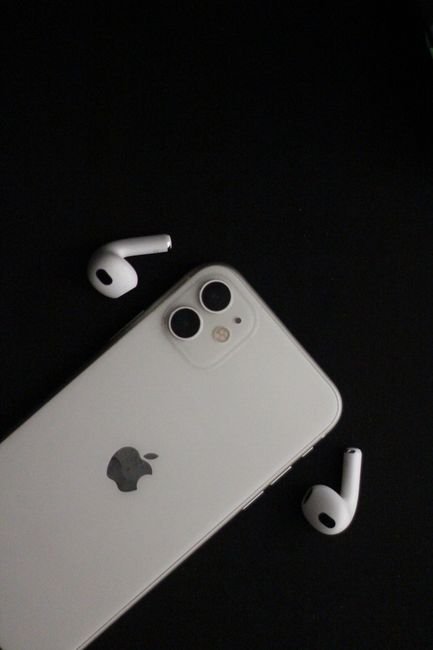
AirPods Original: The Ultimate Guide to Apple’s First True Wireless Earbuds
When Apple unveiled the iPhone 7 in 2016, it wasn’t just the removal of the headphone jack that made waves. It was the simultaneous introduction of a product that would redefine personal audio: the original AirPods. These unassuming white earbuds, often met with initial skepticism, quickly became a cultural phenomenon and a testament to Apple’s ability to predict and shape consumer desires. This guide delves deep into the original AirPods, exploring their design, functionality, impact, and enduring legacy.
Design and Ergonomics: Simplicity Personified
The design of the original AirPods was a masterclass in minimalist aesthetics. Eschewing wires entirely, they presented a clean, unadorned white plastic shell. The iconic stem, a direct descendant of the EarPods’ wired predecessors, housed crucial technology while also serving as an intuitive touch control surface. Apple’s commitment to a universal fit, while a point of contention for some, was a bold design choice that prioritized simplicity and ease of use. The smooth, rounded contours were designed to sit comfortably in the ear canal without the need for intrusive silicone tips, offering a lightweight and unobtrusive listening experience for many. The charging case, a small, pebble-like object, was equally revolutionary. Its compact size made it effortlessly pocketable, and the magnetic closure provided a satisfying tactile experience. The case not only protected the AirPods but also served as their portable power source, a crucial element in making true wireless listening a practical reality.
Core Functionality: Seamless Integration and Intuitive Control
The magic of the original AirPods lay not just in their wireless nature but in their seamless integration with the Apple ecosystem. The W1 chip, a proprietary Apple silicon, was the unsung hero. This custom chip enabled instant pairing with iPhones, iPads, and Macs with a simple tap. This “magic” pairing experience, as it was often dubbed, eliminated the tedious Bluetooth pairing process that plagued other wireless earbuds.
Double-tapping either AirPod could be customized to perform various actions: play/pause, skip forward, skip backward, or activate Siri. This touch-sensitive control, while basic by today’s standards, was a significant leap forward in user interaction for wireless earbuds. Siri integration was a key selling point, allowing users to control music playback, make calls, send messages, and get directions all with voice commands, further enhancing the hands-free experience.
Audio Quality: A Balanced and Accessible Sound Profile
While not audiophile-grade, the original AirPods delivered a surprisingly balanced and enjoyable audio experience for their target audience. Apple focused on a sound signature that was pleasing for a wide range of music genres and spoken word content. The bass was present but not overpowering, mids were clear, and highs were generally well-defined. For everyday listening, commuting, and casual enjoyment, the audio quality was more than sufficient. They offered a significant upgrade over the tinny sound often associated with early Bluetooth headphones. The open-ear design, while contributing to the comfortable fit, meant that active noise cancellation was absent, and the soundstage was not as immersive as some sealed designs. However, this also allowed users to remain aware of their surroundings, a safety feature for pedestrians and cyclists.
Battery Life and Charging: The Foundation of True Wireless Freedom
The battery life of the original AirPods was a key factor in their success. Apple advertised up to 5 hours of listening time on a single charge, which, while modest by today’s standards, was groundbreaking for true wireless earbuds at the time. The charging case provided an additional 24 hours of listening time, effectively eliminating battery anxiety for most users throughout a typical day. A quick 15-minute charge in the case was enough to provide about 3 hours of listening time, a crucial feature for users on the go. This combination of earbud and case battery life made the AirPods a truly practical and convenient solution for all-day audio consumption.
The W1 Chip: The Secret Sauce of Seamless Connectivity
The Apple W1 chip was more than just a Bluetooth module; it was a sophisticated piece of custom silicon that revolutionized the wireless earbud experience. Its primary function was to optimize power efficiency and ensure a stable, robust wireless connection. This led to a significant reduction in audio dropouts and a more consistent listening experience compared to many competing Bluetooth headphones of the era. The W1 chip also managed the seamless switching between Apple devices. Once paired with an iPhone, the AirPods would automatically recognize and connect to a logged-in Mac or iPad, a feature that felt like magic and significantly streamlined multi-device usage. This intelligent connectivity was a major differentiator and a key reason for the AirPods’ rapid adoption among Apple users.
Impact and Legacy: Redefining Personal Audio and Paving the Way
The original AirPods were not just a product; they were a cultural reset. They normalized the idea of truly wireless earbuds, making them a mainstream accessory. Their ubiquity on the streets and in public spaces became a visual shorthand for a modern, connected lifestyle. Beyond their aesthetic impact, they fundamentally altered the personal audio market. Competitors rushed to replicate Apple’s success, leading to a rapid evolution of true wireless technology. The emphasis shifted from wired headphones to wireless, and manufacturers began prioritizing features like compact charging cases, seamless pairing, and intuitive controls. The original AirPods proved that consumers were willing to embrace new technologies that offered genuine convenience and a refined user experience, even at a premium price point. They demonstrated Apple’s prowess in creating not just devices but entire product categories.
Challenges and Criticisms: The Double-Edged Sword of Design
Despite their overwhelming success, the original AirPods were not without their critics. The universal fit, while convenient for many, meant that they did not provide a secure seal for everyone, leading to concerns about sound isolation and bass response for some users. The lack of active noise cancellation was another drawback for those seeking to block out ambient noise. The white plastic design, while iconic, was also perceived by some as lacking a premium feel. Furthermore, the relatively high price point at launch was a barrier for some potential buyers. The fact that they were easily lost, given their small size and lack of a tether, also became a common anecdote.
The Enduring Appeal: Simplicity, Convenience, and Ecosystem Integration
Years after their release, the original AirPods remain a testament to the power of thoughtful design and seamless integration. For many, they represented a perfect balance of simplicity, convenience, and effective functionality. They offered a gateway into the world of true wireless audio without overwhelming users with complex settings or features. Their ability to instantly connect and switch between Apple devices provided a level of friction-free usability that was unmatched by their competitors at the time. Even as newer models have emerged with advanced features, the original AirPods hold a special place in the history of personal technology, forever changing how we listen to music, take calls, and interact with our devices. They were the spark that ignited the true wireless revolution.