
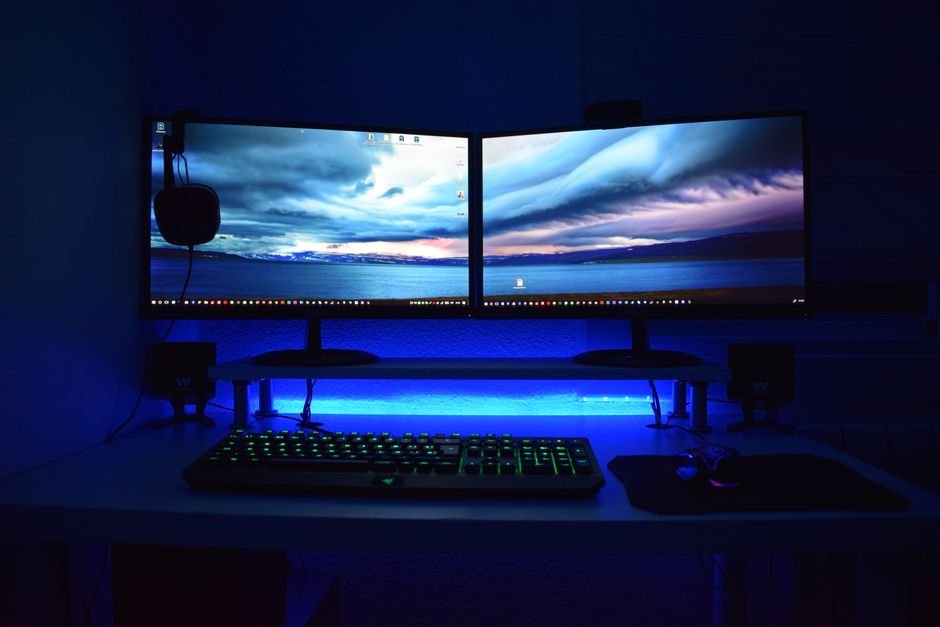
The Science Behind 240Hz: Unleashing the Power of Faster Refresh Rates for Superior Gaming
The relentless pursuit of visual fidelity in gaming has led to remarkable advancements in display technology. Among these, the concept of refresh rate has emerged as a critical factor, particularly for competitive and immersive gaming experiences. While 60Hz and 120Hz displays have become commonplace, the advent and increasing accessibility of 240Hz monitors represent a significant leap forward. This article delves into the intricate science underpinning 240Hz technology, exploring how its rapid refresh rate translates into tangible benefits for gamers, from enhanced responsiveness to smoother motion and reduced visual artifacts.
At its core, a monitor’s refresh rate, measured in Hertz (Hz), signifies the number of times the display updates the image on the screen per second. A 60Hz monitor refreshes 60 times per second, while a 240Hz monitor performs this action a staggering 240 times. This fundamental difference has profound implications for how we perceive motion and interact with digital content. The human eye, while not a perfect scientific instrument, can perceive differences in refresh rates, especially at higher thresholds. The rapid succession of images on a 240Hz display creates a more continuous and fluid visual experience, akin to observing a flipbook with an incredibly high frame count.
The science behind this enhanced fluidity lies in the reduction of what’s known as “motion blur.” When a display has a lower refresh rate, and the image on screen changes rapidly (as in fast-paced games), the pixels have less time to transition to their new state. This delay can result in a smearing effect, where moving objects appear blurred and indistinct. Imagine a still image in a flipbook: if you flip it slowly, the individual images are distinct. Flip it quickly, and the motion appears smoother. A 240Hz monitor, by refreshing 240 times per second, significantly minimizes the duration between each frame. This means the pixels have a much shorter interval to transition, drastically reducing the time they spend in an intermediate state. Consequently, fast-moving objects appear sharper, with greater detail retained, allowing gamers to discern crucial information that might otherwise be lost in the blur.
Beyond motion blur, 240Hz technology directly addresses the issue of input lag. Input lag refers to the delay between a player’s action (e.g., pressing a button on a controller or mouse) and the corresponding visual feedback on the screen. This lag can be a critical disadvantage in competitive gaming, where split-second reactions can determine victory or defeat. A significant contributor to input lag is the display’s refresh rate. If a monitor refreshes only 60 times per second, it can take up to 16.67 milliseconds for a new frame to be displayed after it’s rendered by the graphics card. In contrast, a 240Hz monitor can display a new frame every 4.17 milliseconds. This drastically reduced display latency means that the visual representation of your actions appears on screen much sooner, leading to a more responsive and immediate gaming experience. The connection between the player and the game becomes tighter, fostering a sense of direct control and precision.
The human visual system’s ability to perceive these differences is a complex area of study. While the exact threshold for perceiving fluid motion varies among individuals, studies have shown that the benefits of higher refresh rates are noticeable and quantifiable. Beyond a certain point, the perceived improvement may diminish, but the jump from 60Hz to 120Hz and then to 240Hz offers increasingly pronounced advantages for those sensitive to visual fidelity and responsiveness. The increased frame rate allows the eyes to track moving objects more smoothly, reducing the cognitive load required to process visual information and enabling quicker decision-making.
Furthermore, the science of persistence of vision plays a role. Our brains interpret a rapid succession of still images as continuous motion. The higher the frame rate, the more “real” this perceived motion becomes. At 240Hz, the gaps between frames are so small that the illusion of seamless movement is significantly enhanced. This is particularly beneficial in games that require precise aiming, tracking of enemy movements, or navigating complex environments at high speeds. Being able to see an opponent’s head turn or a projectile’s trajectory with greater clarity can provide a critical edge.
The implementation of 240Hz technology involves sophisticated display panels and advanced signal processing. Technologies like TN (Twisted Nematic) panels, while historically known for their faster response times, have been optimized to achieve these high refresh rates. More recently, advancements in IPS (In-Plane Switching) and VA (Vertical Alignment) panels have also enabled 240Hz capabilities, often with improved color accuracy and viewing angles, offering a more well-rounded visual experience. The underlying electronics must be capable of processing and displaying such a high volume of data without introducing additional latency or artifacts. This often involves specialized timing controllers and high-bandwidth display interfaces like DisplayPort.
It’s crucial to understand that achieving the full benefits of a 240Hz monitor requires a corresponding gaming PC capable of rendering games at or near 240 frames per second. If a graphics card cannot consistently produce 240 frames per second, the monitor will simply display duplicate frames or be limited by the GPU’s output. This highlights the symbiotic relationship between hardware components in the pursuit of high-refresh-rate gaming. Technologies like NVIDIA’s G-Sync and AMD’s FreeSync are also vital for maximizing the benefits of 240Hz. These adaptive synchronization technologies dynamically adjust the monitor’s refresh rate to match the frame rate output of the graphics card. This eliminates screen tearing, a visual artifact where the display shows information from multiple frames simultaneously, and further reduces stuttering and input lag, creating an even smoother and more responsive experience, especially when frame rates fluctuate.
The psychological impact of 240Hz gaming is also a factor. The reduced visual strain and increased sense of control can lead to improved player performance, greater enjoyment, and a more immersive experience. Gamers often report feeling “more in control” and “less fatigued” during extended play sessions on high-refresh-rate displays. This is because the brain is processing less visual noise and ambiguity, allowing for more efficient engagement with the game.
In conclusion, the science behind 240Hz monitors is rooted in the fundamental principles of visual perception, signal processing, and hardware engineering. By dramatically increasing the number of times an image is refreshed per second, 240Hz technology significantly reduces motion blur, minimizes input lag, and enhances the fluidity of on-screen motion. This translates into a more responsive, precise, and visually immersive gaming experience, providing a tangible advantage for gamers seeking to push their performance to the next level. The continuous evolution of display technology promises even greater advancements, but for now, 240Hz stands as a testament to the pursuit of visual perfection in the digital realm.