
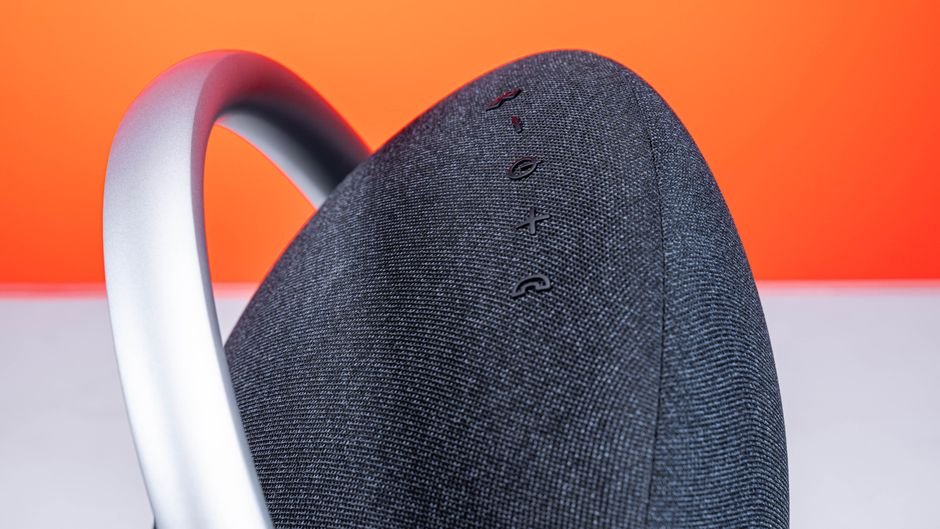
The ubiquitous Bluetooth speaker, a staple of modern life, has undergone a remarkable evolution. From clunky, tinny devices to portable sound powerhouses, its journey has been defined by miniaturization, enhanced audio fidelity, and ever-increasing convenience. But as we stand on the cusp of new technological frontiers, what does the future hold for these beloved audio companions? The trajectory points towards a landscape brimming with innovation, focusing on smarter features, superior sound, seamless integration, and a heightened user experience.
One of the most significant advancements on the horizon is the evolution of audio quality and spatialization. While current Bluetooth speakers offer impressive sound for their size, the pursuit of audiophile-grade experiences in portable form factors continues. Next-generation drivers, coupled with advanced digital signal processing (DSP), will unlock richer bass, clearer mids, and more detailed highs. Expect to see a greater emphasis on true wireless stereo (TWS) capabilities, allowing for even more convincing and immersive stereo imaging from multiple speakers. Beyond traditional stereo, the integration of spatial audio technologies like Dolby Atmos and DTS:X into Bluetooth speakers is a distinct possibility. This would enable a three-dimensional soundscape, placing audio elements all around the listener, transforming casual listening into a cinematic or concert-hall experience, even in a portable setting. Imagine a portable speaker that can dynamically adjust its soundstage based on its environment and placement, creating a personalized audio bubble that adapts to your surroundings.
Intelligence and connectivity are poised to become even more central to the Bluetooth speaker experience. As smart home ecosystems mature, Bluetooth speakers will transition from mere audio output devices to integral components of a connected living space. Enhanced voice assistant integration, moving beyond basic commands to more sophisticated conversational AI, will allow for seamless control of music playback, smart home devices, and information retrieval. Future speakers might learn your listening habits and preferences, proactively suggesting playlists or adjusting audio settings based on the time of day or your current activity. Furthermore, the proliferation of mesh networking technologies, potentially integrated with Bluetooth, could lead to a more robust and scalable multi-room audio experience. Instead of relying solely on Wi-Fi for complex multi-room setups, Bluetooth could facilitate easier pairing and synchronization of multiple speakers for a truly unified audio presence throughout a home or even an outdoor gathering. This evolution will also see a greater reliance on AI-powered noise cancellation and sound optimization. Speakers will be able to intelligently analyze their acoustic environment and adjust their output to deliver the best possible sound, regardless of background noise or room acoustics.
Durability and sustainability will also play a crucial role in shaping the future of Bluetooth speakers. As these devices become more integrated into our active lifestyles, the demand for robust and weather-resistant designs will continue to grow. Expect to see increased adoption of advanced materials that offer superior protection against water, dust, and impact, making them ideal companions for outdoor adventures, beach trips, and poolside lounging. Beyond mere physical resilience, the future will also be defined by a stronger commitment to eco-friendly design and manufacturing. This will involve using recycled and recyclable materials, optimizing energy efficiency for longer battery life and reduced power consumption, and potentially incorporating modular designs that allow for easier repair and component replacement, extending the lifespan of the product and minimizing electronic waste. The move towards more sustainable charging solutions, perhaps integrating solar charging capabilities for outdoor models, is also a plausible development.
Power and battery technology remain critical areas of innovation. While battery life has improved dramatically, the desire for even longer playback times and faster charging will continue to drive research. Advancements in battery chemistry, such as solid-state batteries, could offer significant improvements in energy density, allowing for smaller, lighter speakers with extended operational periods. Furthermore, the integration of wireless charging technologies, beyond just charging the speaker itself, could lead to speakers that can wirelessly charge other devices, acting as portable power banks, adding another layer of convenience. The development of more efficient power management systems will also contribute to longer battery life without compromising on audio performance.
The user interface and interaction with Bluetooth speakers will also undergo a significant transformation. While physical buttons will likely remain, the emphasis will shift towards more intuitive and seamless control methods. Gesture control, allowing users to adjust volume or skip tracks with simple hand movements, could become more prevalent. Haptic feedback integrated into the speaker’s casing could provide tactile confirmation of actions. Furthermore, the development of companion apps will become even more sophisticated, offering granular control over EQ settings, multi-speaker configurations, and personalized audio profiles. The integration of NFC (Near Field Communication) for instant pairing will likely become standard, simplifying the initial connection process. The future could also see the emergence of context-aware audio delivery, where the speaker intelligently adjusts its output based on your location within a room or your proximity to the device.
Finally, specialization and niche applications will continue to emerge. While all-purpose Bluetooth speakers will remain popular, we can anticipate the development of speakers tailored for specific use cases. For example, speakers designed for gaming might offer ultra-low latency and immersive directional audio. Portable projectors might integrate high-quality Bluetooth speakers for a complete home theater experience on the go. Even specialized speakers for environments like kitchens or workshops, designed to withstand specific conditions and offer relevant functionalities, could gain traction. The ability to seamlessly integrate with augmented reality (AR) and virtual reality (VR) experiences, providing spatial audio cues that enhance immersion, is another exciting frontier for Bluetooth speakers.
The future of Bluetooth speakers is not about a single revolutionary leap, but rather a continuous stream of incremental yet significant advancements. These innovations will converge to create audio devices that are not only more powerful and portable but also smarter, more integrated, and more attuned to our individual needs and lifestyles. The humble Bluetooth speaker is set to become an even more indispensable and intelligent companion in our increasingly connected world.