
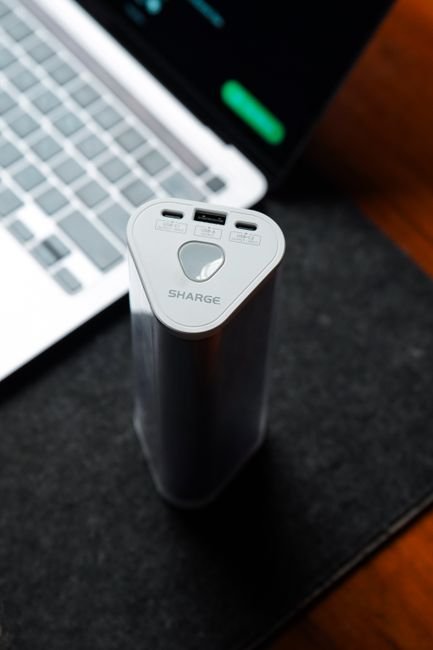
Choosing a Power Bank: Factors to Consider for Peak Performance
In today’s hyper-connected world, a reliable power bank is no longer a luxury but a necessity. From navigating unfamiliar cities to ensuring your devices stay alive during long commutes or unexpected outages, a well-chosen power bank offers peace of mind and uninterrupted connectivity. However, with a dizzying array of options available, selecting the right one can feel overwhelming. To achieve peak performance and ensure your power bank truly meets your needs, a careful consideration of several key factors is paramount.
Capacity: The Cornerstone of Power
The most crucial specification of any power bank is its capacity, measured in milliampere-hours (mAh). This figure dictates how many times you can recharge your devices. To determine the ideal capacity, consider the battery size of the devices you intend to charge. Smartphone batteries typically range from 3,000 mAh to 5,000 mAh, while tablets can have batteries exceeding 8,000 mAh.
A general rule of thumb is to multiply the mAh of your device by the number of full charges you desire. For instance, if your smartphone has a 4,000 mAh battery and you want to charge it twice, you’d ideally look for a power bank with at least 8,000 mAh. However, it’s important to remember that power banks have an efficiency rating, meaning not all the advertised capacity is delivered to your device. A typical efficiency is around 80-90%. Therefore, it’s wise to opt for a capacity slightly higher than your calculated need to account for this loss. For frequent travelers or those who rely heavily on multiple devices, capacities of 10,000 mAh, 20,000 mAh, or even higher are readily available. Smaller, more portable options often sit in the 5,000-10,000 mAh range, perfect for daily commutes.
Output Power and Charging Speed: Beyond Mere Capacity
While capacity determines how much power you have, output power dictates how fast you can deliver it. This is measured in Watts (W) or Amperes (A) and Volts (V). Devices are increasingly supporting fast-charging technologies like Qualcomm Quick Charge (QC) and USB Power Delivery (USB PD). A power bank with a higher output wattage will charge your compatible devices significantly faster.
For smartphones, look for power banks supporting at least 18W for a noticeable speed improvement. For tablets and laptops, 30W, 45W, or even 65W and above are crucial for efficient charging. Pay attention to the specific fast-charging protocols supported by both your power bank and your devices. A power bank might boast high wattage, but if it doesn’t support your device’s fast-charging standard, you’ll be limited to standard charging speeds. Some power banks offer multiple output ports, each with different power ratings, allowing you to charge various devices simultaneously at their optimal speeds.
Input Charging Speed: Replenishing the Power Bank Itself
Just as crucial as output speed is the input charging speed of the power bank. A high-capacity power bank can take a considerable amount of time to recharge itself if it has a slow input. Look for power banks that support fast input charging, often utilizing USB PD. This means you can connect the power bank to a compatible fast charger and significantly reduce the time it takes to be ready for your next adventure. A 20,000 mAh power bank with slow input could take over 10 hours to fully charge, rendering it less convenient for spontaneous use. Conversely, with fast input charging, this time can be reduced to a few hours.
Port Selection and Versatility: Connecting Your Ecosystem
The types and number of ports on a power bank determine its compatibility with your various devices. The most common ports are USB-A and USB-C. USB-C is the modern standard, offering higher data transfer speeds and supporting Power Delivery for faster charging of a wider range of devices, including laptops.
Consider the devices you own. If you primarily use USB-C devices, a power bank with multiple USB-C ports is ideal. If you still have older devices with USB-A, ensure the power bank includes at least one USB-A port. Some power banks also feature dedicated ports for specific devices, like Lightning ports for Apple devices, though these are becoming less common as USB-C adoption grows. The number of ports is also important if you need to charge multiple devices simultaneously. A power bank with two or more output ports offers greater convenience.
Build Quality and Durability: Longevity and Reliability
A power bank is an investment, and its build quality directly impacts its lifespan and reliability. Look for power banks constructed from robust materials that can withstand everyday wear and tear. Many reputable brands use durable plastics, often with rubberized grips or protective coatings. Consider the weight and size; while higher capacity often means more bulk, some manufacturers have developed compact designs for their high-capacity offerings.
Furthermore, check for safety certifications. Reputable power banks will have certifications like CE, FCC, and RoHS, indicating they meet safety and environmental standards. These certifications often imply the presence of built-in safety features such as overcharge protection, over-discharge protection, short-circuit protection, and temperature control, which are vital for preventing damage to both the power bank and your connected devices.
Additional Features: Enhancing User Experience
Beyond the core specifications, several additional features can significantly enhance a power bank’s usability and value:
- LED Indicators: Most power banks feature LED lights to indicate the remaining battery level. Some offer more detailed displays showing the exact percentage.
- Built-in Cables: Some power banks come with integrated cables, eliminating the need to carry extra wires. However, these can sometimes limit charging speed or compatibility.
- Wireless Charging (Qi Compatibility): For users with Qi-compatible smartphones, a power bank with built-in wireless charging offers ultimate convenience, allowing you to charge your phone simply by placing it on the power bank.
- Pass-Through Charging: This feature allows you to charge the power bank and a connected device simultaneously. This is particularly useful when you only have one wall outlet available.
- Flashlight: A small, integrated LED flashlight can be a surprisingly handy addition for emergencies or low-light situations.
When evaluating these features, consider which ones genuinely add value to your daily routine and which are merely gimmicks. Prioritize features that directly address your charging needs and enhance convenience.
Brand Reputation and Reviews: Trustworthy Choices
In the crowded power bank market, choosing a reputable brand is crucial for ensuring quality, safety, and reliable performance. Well-known brands like Anker, RAVPower, Aukey, and Xiaomi have established a strong reputation for producing durable and efficient power banks.
Before making a purchase, always research customer reviews and professional product evaluations. Pay attention to consistent feedback regarding charging speeds, battery longevity, durability, and customer support. Look for reviews that address your specific use cases and highlight any potential drawbacks. A power bank with overwhelmingly positive reviews from multiple sources is a strong indicator of a worthwhile purchase.
By meticulously considering these factors – capacity, output and input charging speeds, port selection, build quality, and additional features – you can navigate the power bank market with confidence and select a device that will consistently deliver peak performance, keeping you connected and powered up wherever life takes you.