
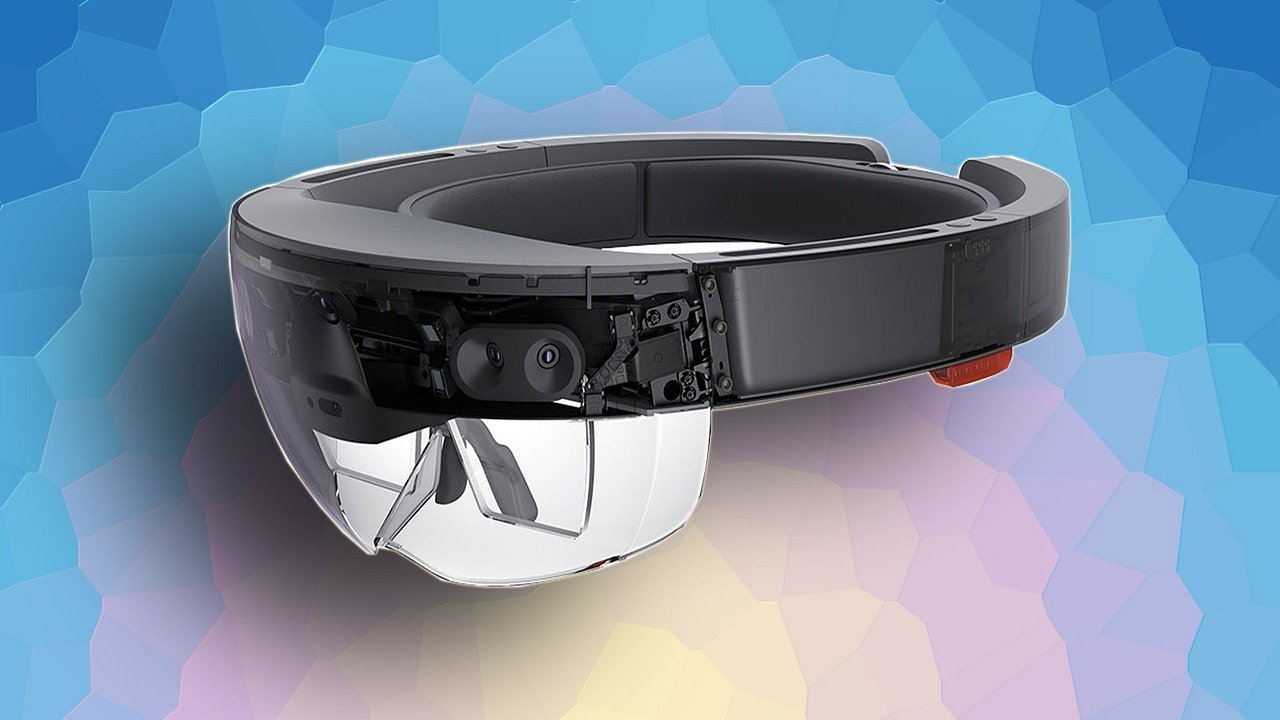
AR Glasses: The Future of Vision is Here
The relentless march of technological innovation has consistently redefined our interaction with the world. From the printing press to the internet, each leap has democratized information and expanded human capabilities. Now, we stand on the precipice of another transformative era, one where the digital and physical realms merge seamlessly: the age of Augmented Reality (AR) glasses. These wearable devices are not merely a futuristic novelty; they represent a paradigm shift in how we perceive, interact with, and understand our surroundings. AR glasses promise to overlay digital information directly onto our field of vision, offering a richer, more intuitive, and profoundly more informed experience of reality.
The core principle behind AR glasses is the projection of digital content – text, images, videos, 3D models – onto transparent lenses or directly onto the user’s retina, creating an illusion of these digital elements being present in the real world. This is achieved through a sophisticated interplay of miniature displays, advanced optics, sensors, and processing power, all miniaturized to fit into a comfortable and stylish eyewear form factor. Unlike Virtual Reality (VR), which immerses users in entirely digital environments, AR augments our existing reality, enhancing it with contextual information and interactive digital objects.
The potential applications of AR glasses are vast and span virtually every sector of human endeavor. In the realm of professional environments, AR glasses are poised to revolutionize workflows. Imagine a surgeon, guided by real-time anatomical overlays projected directly onto their patient during surgery, enhancing precision and reducing errors. Field technicians can access repair manuals, schematics, and remote expert assistance directly within their line of sight, eliminating the need to juggle physical manuals or constantly look away from their task. Architects and designers can visualize 3D models of their creations on-site, iterating and making adjustments in real-time. Logistics and warehousing operations can be streamlined with navigation prompts and item identification projected onto shelves and products, accelerating picking and packing processes.
For education and training, AR glasses offer unparalleled immersive learning experiences. Students can explore historical sites as if they were there, dissect virtual frogs without the mess, or learn complex machinery by interacting with holographic simulations. This hands-on, experiential approach fosters deeper understanding and retention compared to traditional methods. For corporate training, AR can provide realistic simulations of dangerous or complex scenarios, allowing employees to practice skills in a safe, controlled environment.
The consumer market is also set to be profoundly impacted. Navigation will become a breeze with turn-by-turn directions appearing as arrows on the street ahead. Shoppers can receive product information, reviews, and price comparisons simply by looking at items in a store. Social interactions can be enhanced with digital tags or information about friends appearing when you look at them (with their consent, of course). Entertainment will be transformed, with games blending seamlessly into our physical environments and interactive storytelling becoming a new frontier. Imagine participating in a scavenger hunt where virtual clues are hidden around your neighborhood, or watching a virtual concert unfold in your living room.
The underlying technology powering this revolution is rapidly advancing. Micro-displays, such as micro-OLED or LCoS (Liquid Crystal on Silicon), are crucial for projecting crisp and vibrant digital images. Waveguide optics are a key innovation, allowing light to be efficiently guided from the display to the user’s eye while maintaining a wide field of view and a compact design. Advanced sensors, including cameras, accelerometers, gyroscopes, and depth sensors, enable the glasses to understand the user’s environment and their position within it, allowing for accurate placement and interaction with digital content. Onboard processing units, often powered by mobile chipsets, are becoming increasingly capable, allowing for complex AR experiences without requiring a tethered smartphone.
Several key players are at the forefront of AR glasses development. Companies like Microsoft with their HoloLens 2 are targeting enterprise and industrial applications, offering robust hardware and a sophisticated development platform. Magic Leap has also been a significant innovator, focusing on delivering compelling visual experiences. More recently, consumer-focused devices from companies like Snap Inc. (Spectacles) and the anticipated offerings from tech giants like Apple and Meta are signaling a broader push towards mainstream adoption. The development is not limited to hardware; a robust ecosystem of software and content is crucial for the widespread success of AR glasses. Developers are actively creating applications and experiences that leverage the unique capabilities of these devices.
However, the path to widespread AR adoption is not without its challenges. Form factor and aesthetics remain significant hurdles. Early AR glasses have often been bulky and utilitarian, a far cry from everyday eyewear. Achieving a sleek, lightweight, and fashionable design that users will be willing to wear for extended periods is paramount. Battery life is another critical concern, as powering the complex array of components requires significant energy. Field of view is also an area of active development, with current devices often offering a limited window into the digital world. Cost is also a barrier to entry for many consumers, although prices are expected to decrease as the technology matures and production scales.
Furthermore, ethical considerations and privacy concerns must be addressed proactively. The ability to continuously record and process visual information raises questions about data security, surveillance, and consent. Establishing clear guidelines and robust privacy protections will be essential for building public trust and ensuring responsible deployment.
Despite these challenges, the trajectory of AR glasses is undeniably upward. The convergence of miniaturization, processing power, display technology, and an expanding developer ecosystem is creating a powerful momentum. As these devices become more affordable, accessible, and capable, they will transition from niche professional tools to ubiquitous personal companions. We are not just talking about a new gadget; we are witnessing the dawn of a new era of human-computer interaction, one that promises to augment our intelligence, enhance our perception, and fundamentally change the way we experience the world. The future of vision is not a distant dream; it is actively being built, one lens at a time, within the sleek frames of AR glasses.