
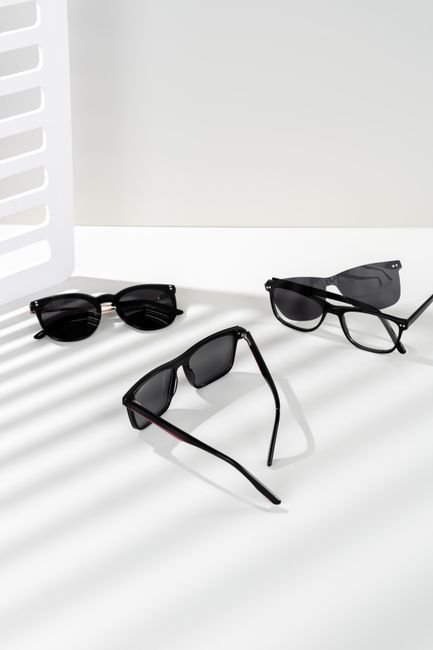
The Sun’s Shield: A Journey Through the History of Sunglasses
Long before the sleek designer shades of today graced the faces of celebrities and fashionistas, humanity sought protection from the sun’s relentless glare. The history of sunglasses is a fascinating tapestry woven from threads of practicality, innovation, and evolving aesthetics, stretching back to ancient civilizations. These early attempts, though rudimentary, laid the groundwork for the ubiquitous accessory we know and rely on today.
Ancient Origins: The First Glints of Protection
The earliest inklings of sun protection can be traced to the Inuit people of the Arctic. Facing the blinding glare of sun reflecting off snow and ice, they developed snow goggles crafted from bone or ivory. These goggles featured narrow slits, painstakingly carved to limit the amount of light entering the eyes, thereby preventing snow blindness, a painful and potentially debilitating condition. While not “sunglasses” in the modern sense, these were a crucial early adaptation to harsh sunlight.
Further back, evidence suggests the use of flat panes of smoky quartz by the Romans. Emperor Nero, famously, is said to have watched gladiatorial contests through emeralds, though the primary motivation here might have been color enhancement rather than light reduction. These were not practical eyewear for everyday use but hint at an early understanding of manipulating light with colored materials. Similarly, ancient Chinese judges in the 13th century are documented as wearing flat, tinted lenses made from smoky quartz or other minerals. These were not for sun protection but to conceal their facial expressions during court proceedings, a testament to the multifaceted potential of tinted lenses.
The Dawn of Tinted Lenses: A Shift Towards Vision Enhancement
The 18th century marked a more significant step towards functional eyewear. In 1752, English optician James Ayscough experimented with tinted lenses, believing that blue and green glass could correct vision problems. While his primary focus was on vision, his explorations with tinted glass laid a foundational understanding of how different colors could affect light perception. His work, though not directly aimed at sun protection, contributed to the growing knowledge base surrounding colored lenses.
The 19th century saw further advancements. The development of improved glass manufacturing techniques allowed for more consistent and predictable tinting. Opticians began to explore different colored lenses for various purposes, including mitigating glare. Amber and brown tints, in particular, started to gain traction for their perceived ability to improve contrast and reduce eye strain in bright conditions. This period saw a gradual shift from purely decorative or masking uses of tinted lenses to a more functional approach.
The Rise of the Modern Sunglass: From Necessity to Style
The true birth of the modern sunglass can be largely attributed to the early 20th century and the burgeoning automobile industry. As cars became more prevalent, drivers faced increased exposure to sunlight and road glare. This growing need for eye protection coincided with advancements in lens technology.
A pivotal moment arrived in 1929 when Sam Foster, founder of the Foster Grant company, began mass-producing sunglasses. He recognized the potential market and started selling affordable sunglasses on the beaches of Atlantic City, New Jersey. These early Foster Grant sunglasses were primarily made of acetate plastic and featured dark, tinted lenses. They quickly became a popular fashion accessory, especially among beachgoers and vacationers.
The 1930s also witnessed a significant scientific breakthrough that would revolutionize sunglass design. In 1936, Edwin H. Land, the founder of Polaroid Corporation, invented a new type of polarizing lens. These lenses, capable of significantly reducing glare by filtering out horizontally polarized light, were a game-changer for anyone exposed to bright sunlight, particularly pilots. The U.S. Army Air Corps commissioned Land to develop sunglasses for pilots to reduce the blinding glare from the sun at high altitudes. These became known as “Ray-Ban” sunglasses, a name that would soon become synonymous with iconic eyewear.
World War II and the Golden Age of Sunglasses
World War II played an unexpected but crucial role in popularizing sunglasses. The Ray-Ban Aviator, with its distinctive teardrop shape and polarized lenses, became standard issue for American pilots. Its functionality and association with heroic aviators propelled it into mainstream consciousness. Soldiers returning from the war brought back a newfound appreciation for sunglasses, further cementing their status as both practical and fashionable items.
The post-war era ushered in a golden age for sunglasses. Hollywood played a significant role in this cultural phenomenon. Movie stars like Audrey Hepburn, James Dean, and Marilyn Monroe were frequently photographed wearing sunglasses, transforming them into symbols of glamour, mystery, and cool. The sunglasses they wore, often oversized and dramatic, became aspirational fashion statements. Brands like Ray-Ban, with their Wayfarer and Aviator models, became enduring icons of American style.
Innovation and Diversification: The Evolution Continues
The latter half of the 20th century saw continuous innovation in sunglass technology and design. The development of new lens materials, such as polycarbonate and Trivex, offered improved impact resistance and lighter weight. Advancements in lens coatings, including anti-reflective, scratch-resistant, and UV-protective layers, enhanced both performance and durability.
The fashion industry embraced sunglasses with open arms, leading to an explosion of styles, shapes, and colors. From the minimalist chic of the 1960s to the bold statements of the 1980s, sunglasses consistently reflected and influenced prevailing fashion trends. Designer brands entered the market, elevating sunglasses from functional accessories to high-fashion statements, with price tags to match.
The 21st century has seen further specialization and technological integration. Prescription sunglasses became more accessible and sophisticated. The rise of sports eyewear led to the development of specialized sunglasses designed for specific activities, offering enhanced grip, ventilation, and optical clarity. The integration of technology, such as Bluetooth connectivity and heads-up displays, has even begun to emerge, blurring the lines between eyewear and wearable tech.
Today, sunglasses are more than just a means of sun protection. They are a vital fashion accessory, a personal statement, and a testament to centuries of human ingenuity in harnessing light and protecting our vision. From the snow goggles of the Arctic to the high-tech eyewear of today, the journey of the sunglass is a reflection of our enduring relationship with the sun and our constant pursuit of both form and function.