
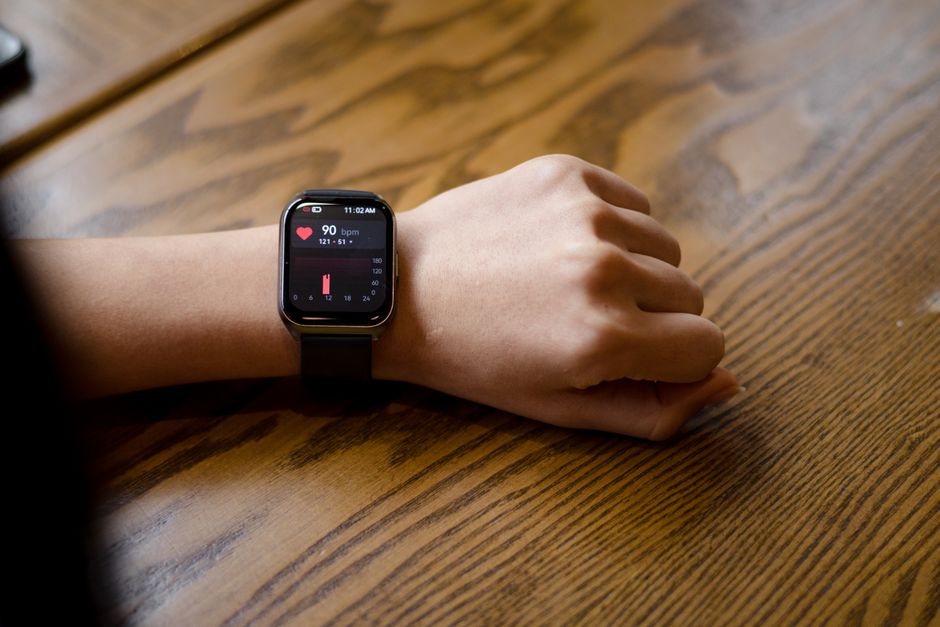
Unlock Your Fitness Potential: Mastering Heart Rate Data with Smartwatches
The modern smartwatch has transcended its role as a mere timekeeper, evolving into a powerful personal fitness companion. Among its most valuable features, heart rate monitoring stands out, offering a window into your body’s physiological response to exercise and daily life. This article delves deep into how you can leverage your smartwatch’s heart rate data to optimize your workouts, understand your recovery, and ultimately, achieve your fitness goals more effectively.
Understanding Your Heart Rate: The Foundation of Smart Fitness
Your heart rate, measured in beats per minute (BPM), is a direct indicator of your cardiovascular system’s workload. When you exercise, your muscles demand more oxygen, prompting your heart to pump faster to deliver it. Your smartwatch, equipped with optical heart rate sensors (typically LEDs and photodiodes), measures this by detecting the blood flow in your wrist. As your heart beats, blood volume in your arteries fluctuates, and the sensors pick up these changes.
Key Heart Rate Metrics and What They Mean:
- Resting Heart Rate (RHR): This is your heart rate when you are completely at rest, ideally measured first thing in the morning before getting out of bed. A lower RHR generally indicates a more efficient cardiovascular system, a hallmark of good fitness. Tracking your RHR over time can reveal improvements in your aerobic capacity and overall health. For most adults, a healthy RHR falls between 60 and 100 BPM, but athletes often have RHRs in the 40s.
- Maximum Heart Rate (MHR): This is the highest number of times your heart can beat per minute during intense physical activity. While a precise MHR can only be determined through a medically supervised stress test, a common and reasonably accurate estimation formula is 220 minus your age. For instance, a 30-year-old’s estimated MHR would be 190 BPM.
- Heart Rate Zones: These are ranges of your MHR that correspond to different exercise intensities and physiological benefits. Your smartwatch often displays these zones, helping you tailor your workouts.
- Zone 1 (Very Light): 50-60% of MHR. Ideal for warm-ups, cool-downs, and active recovery. Focuses on light aerobic activity and relaxation.
- Zone 2 (Light): 60-70% of MHR. The “fat-burning zone.” Excellent for building endurance and improving aerobic base. You can hold a conversation easily.
- Zone 3 (Moderate): 70-80% of MHR. Improves cardiovascular fitness and endurance. You can speak in short sentences.
- Zone 4 (Hard): 80-90% of MHR. Boosts anaerobic threshold and improves performance. Talking is difficult.
- Zone 5 (Maximum): 90-100% of MHR. High-intensity interval training (HIIT). Improves speed and power, but is very demanding.
- Heart Rate Recovery (HRR): This measures how quickly your heart rate drops after exercise. A faster HRR indicates a more efficient and fitter cardiovascular system. To measure it, note your heart rate at the end of an intense workout and then again one or two minutes later. A drop of 20 BPM or more within the first minute is generally considered good.
Optimizing Your Workouts with Heart Rate Data:
Your smartwatch transforms your workouts from guesswork into data-driven precision. By understanding and utilizing your heart rate data, you can:
-
Target Specific Fitness Goals:
- Endurance Training: Spend more time in Zones 2 and 3. This builds your aerobic base, allowing you to sustain activity for longer periods.
- Fat Burning: Focus on Zone 2. While higher intensity burns more calories during the workout, Zone 2 workouts can be sustained for longer, leading to significant calorie expenditure over time, and it is particularly effective at utilizing fat as a fuel source.
- Cardiovascular Improvement & HIIT: Incorporate intervals in Zones 4 and 5. These challenging bursts improve your heart’s ability to pump blood efficiently and increase your anaerobic capacity.
-
Monitor Workout Intensity: Are you pushing yourself hard enough, or are you overdoing it? Your smartwatch provides real-time feedback. If your heart rate is consistently too low for your target zone, increase your intensity. If it’s too high and you’re struggling to maintain it, reduce your effort. This prevents undertraining and overtraining, both detrimental to progress.
-
Track Progress Over Time: As your fitness improves, your heart will become more efficient. This means your heart rate will be lower for the same level of perceived exertion. By reviewing your workout logs and comparing heart rate data for similar activities, you can objectively see how much fitter you’ve become. Your RHR will also likely decrease.
-
Personalize Your Training: Generic training plans don’t account for individual physiology. Your smartwatch’s heart rate data allows you to tailor your workouts to your current fitness level and how your body responds on any given day. On days you feel fatigued, a lower-intensity workout within your target zone might be more beneficial than pushing for a high-intensity session.
Beyond the Workout: Understanding Your Body’s Recovery
Heart rate data isn’t just for during exercise. It offers crucial insights into your recovery:
- Assessing Recovery Needs: After a strenuous workout, your heart rate will gradually return to its resting level. A slow recovery can indicate that you’ve pushed too hard or that your body needs more rest. Your smartwatch’s HRR metric is invaluable here.
- Identifying Overtraining: Consistently elevated RHR, especially when you wake up, can be a sign of overtraining. If your heart is working harder even at rest, it’s an indication that your body hasn’t fully recovered from previous training stimuli.
- Sleep Tracking and Heart Rate: Many smartwatches also track your heart rate during sleep. Deviations from your normal nocturnal heart rate, or prolonged periods of elevated heart rate during sleep, can sometimes signal stress, illness, or poor sleep quality. This information can prompt you to prioritize rest and recovery.
Practical Tips for Maximizing Your Smartwatch’s Heart Rate Data:
- Ensure Proper Fit: For accurate readings, your smartwatch should be snug but not uncomfortably tight on your wrist. It should sit a finger’s width above your wrist bone.
- Clean Your Sensor: Dirt and sweat can interfere with the optical sensor. Wipe it clean regularly.
- Understand Your Watch’s Algorithm: Different smartwatches use slightly different algorithms for calculating heart rate zones. Familiarize yourself with how your device estimates your MHR and defines its zones.
- Calibrate with Perceived Exertion: While heart rate data is objective, your subjective feeling of effort is also important. Learn to correlate your heart rate with how you feel. This will build your intuition and allow you to adjust your workouts even if your watch isn’t readily available.
- Don’t Obsess Over Numbers: Heart rate data is a tool, not a dictator. Use it to inform your training, but also listen to your body. If you feel pain or extreme fatigue, stop, regardless of what your watch says.
- Look for Trends: Individual readings are less important than the overall trends over days, weeks, and months. Track your RHR, workout heart rates, and HRR to see your long-term progress.
- Consider External Sensors for Precision: For activities where wrist-based tracking can be less accurate (e.g., during intense cycling with a lot of wrist movement), consider pairing your smartwatch with a chest strap heart rate monitor for superior precision.
By embracing the wealth of information your smartwatch provides regarding your heart rate, you empower yourself to train smarter, recover more effectively, and unlock your true fitness potential. This data-driven approach transforms exercise from a generalized activity into a personalized journey towards a healthier, fitter you.