
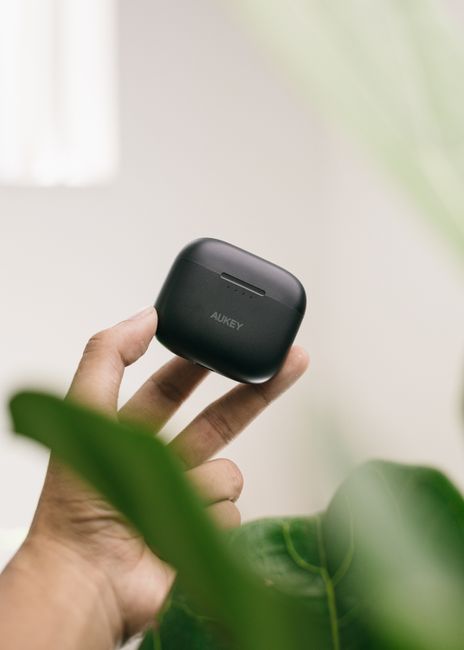
Powering Your Digital Life: Essential Features for Choosing the Right Power Bank
In our increasingly mobile world, a dead phone battery is more than an inconvenience; it’s a digital lifeline severed. Power banks have become indispensable companions, ensuring we stay connected, productive, and entertained on the go. But with a dizzying array of options flooding the market, selecting the right power bank can feel like navigating a tech labyrinth. This comprehensive guide delves into the crucial features you should scrutinize, empowering you to make an informed decision and invest in a power solution that truly meets your needs.
Capacity: The Heartbeat of Your Power Bank
The most fundamental specification of any power bank is its capacity, measured in milliampere-hours (mAh). This figure dictates how many times you can recharge your devices. A higher mAh rating translates to more charging cycles. For everyday use, a 10,000mAh to 20,000mAh power bank is typically sufficient to fully charge a smartphone multiple times. If you’re a heavy user, a frequent traveler, or need to power multiple devices, consider a capacity of 20,000mAh or higher.
- Understanding Your Needs: Calculate the battery capacity of your primary devices. For instance, a smartphone with a 4,000mAh battery would theoretically be recharged twice by a 10,000mAh power bank. However, efficiency losses during the charging process mean you’ll likely get fewer full charges than the raw mAh suggests.
- Portability vs. Power: Larger capacity power banks are generally bulkier and heavier, impacting portability. Balance your need for extended power with your carrying preferences.
Output Ports and Charging Speed: The Flow of Energy
The type and number of output ports, along with their charging speed, are critical for efficient and versatile charging.
- USB-A Ports: The ubiquitous standard, suitable for most smartphones, tablets, and older devices. Look for power banks with multiple USB-A ports if you need to charge several devices simultaneously.
- USB-C Ports: Increasingly common, USB-C offers faster charging speeds and reversible plug orientation. Many modern smartphones and laptops utilize USB-C. A power bank with at least one USB-C output is highly recommended for future-proofing and faster charging.
- Power Delivery (PD) and Quick Charge (QC): These are fast-charging technologies. USB PD is prevalent in Apple and many Android devices, while Qualcomm’s Quick Charge is found in numerous Android smartphones. A power bank supporting PD or QC will dramatically reduce charging times for compatible devices. Check the wattage (W) of the output ports; higher wattage indicates faster charging. For example, a 20W USB-C PD port can charge an iPhone significantly faster than a standard 5W USB-A port.
- Multiple Outputs: If you frequently charge multiple devices, a power bank with at least two output ports is essential. Consider the combined output wattage to ensure it can adequately power all connected devices.
Input Ports and Recharging Speed: Replenishing the Power Bank
Just as important as how quickly a power bank can charge your devices is how quickly it can be recharged itself.
- Micro-USB Input: The older standard, often found on less expensive power banks. Recharging can be slow.
- USB-C Input: The modern standard, offering significantly faster recharging times, especially when paired with a high-wattage wall adapter. This is a crucial feature for convenience.
- Wall Adapter Compatibility: Ensure the power bank’s input port is compatible with the wall adapter you intend to use. A higher wattage wall adapter will recharge a USB-C input power bank much faster.
Build Quality and Durability: A Long-Term Investment
A power bank is an investment, and its build quality directly impacts its lifespan and reliability.
- Materials: Look for robust casings made from durable plastics (ABS, polycarbonate) or even metal. These materials offer better protection against drops and scratches.
- Certifications: Reputable brands often carry safety certifications like CE, FCC, and RoHS, indicating compliance with safety and environmental standards.
- Design: Consider a power bank with a non-slip texture for a secure grip. Some power banks are designed to be water-resistant or even waterproof, ideal for outdoor enthusiasts.
Safety Features: Protecting Your Devices and Yourself
Safety should never be an afterthought. Reputable power banks incorporate multiple safety mechanisms to prevent damage to your devices and the power bank itself.
- Overcharge Protection: Prevents the power bank from being damaged by overcharging.
- Over-discharge Protection: Protects the power bank from draining too much, which can degrade battery health.
- Short Circuit Protection: Guards against damage if the output ports are accidentally short-circuited.
- Overcurrent Protection: Prevents excessive current from flowing to your devices, safeguarding them from damage.
- Overheating Protection: Shuts down the power bank if it starts to overheat, preventing potential fire hazards.
Additional Features to Consider:
- Pass-Through Charging: This allows you to charge the power bank and a connected device simultaneously. It’s incredibly convenient for overnight charging.
- LED Indicators: Simple LEDs can indicate the remaining battery level of the power bank, so you’re never caught off guard.
- Digital Display: A small digital screen can provide a more precise reading of the remaining battery percentage, offering greater clarity.
- Built-in Cables: Some power banks come with integrated cables (USB-C, Lightning), eliminating the need to carry separate cords. However, these can sometimes be less durable.
- Wireless Charging (Qi Certified): For ultimate convenience, some power banks offer wireless charging capabilities. Ensure the power bank is Qi certified for broad compatibility with wireless charging devices.
- Solar Charging: While generally slow and inefficient for full recharging, some power banks feature small solar panels for trickle charging in emergencies. This is a niche feature and not a primary charging solution.
- Smart Features (App Integration): High-end power banks may offer app integration for monitoring battery health, charging history, and even remote control.
Brand Reputation and Reviews: Trustworthy Power
When in doubt, rely on the experience of others. Researching reputable brands and reading user reviews can provide invaluable insights into a power bank’s performance, reliability, and durability. Look for brands with a history of producing quality electronics and consistently positive feedback regarding their power bank offerings. Avoid suspiciously cheap, unbranded options, as they often compromise on safety and performance.
By carefully considering these features, you can confidently select a power bank that not only keeps your devices charged but also offers a seamless, safe, and efficient charging experience, empowering you to stay connected in our ever-evolving digital landscape.