
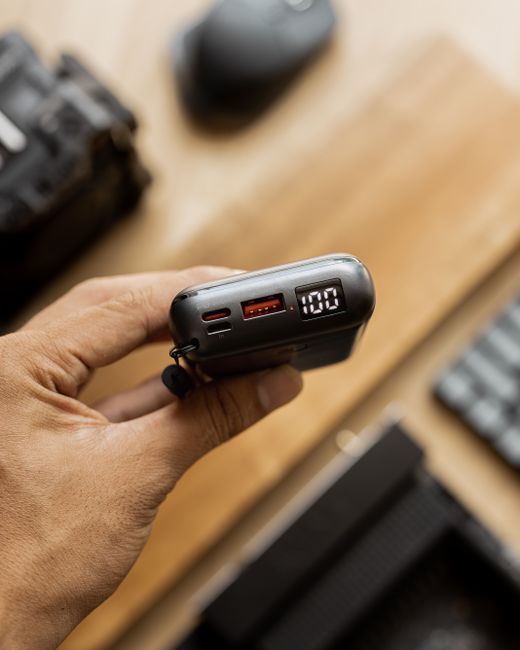
Power Bank Essentials: Your Ultimate Buying Guide
In our hyper-connected world, a dead smartphone battery is more than an inconvenience; it’s a digital paralysis. From navigating unfamiliar streets to capturing precious memories or staying in touch with loved ones, our devices are extensions of ourselves. This is where the humble power bank steps in, a portable lifeline ensuring your devices stay charged on the go. But with a dizzying array of options, choosing the right power bank can feel overwhelming. This comprehensive guide will equip you with the knowledge to make an informed decision, covering everything from capacity and charging speeds to safety features and form factor.
Understanding Power Bank Capacity: The Heart of the Matter
The most crucial specification of any power bank is its capacity, measured in milliampere-hours (mAh). This figure indicates how much electrical charge the power bank can store. A higher mAh rating means more stored energy, allowing you to charge your devices multiple times.
- How to Calculate Your Needs: To determine the ideal capacity, consider the battery size of your primary devices. You can typically find this information in your device’s settings or specifications. For example, if your smartphone has a 3000mAh battery, a 10,000mAh power bank could theoretically charge it around 3.3 times (10,000mAh / 3000mAh = 3.3). However, real-world charging is less efficient due to energy loss during the transfer process. A general rule of thumb is to aim for a power bank with at least twice the capacity of your device’s battery for at least one full charge, and more if you intend to charge multiple devices or require multiple recharges.
- Common Capacity Tiers:
- 3,000mAh – 5,000mAh: Compact and lightweight, ideal for topping up a single smartphone or small gadget.
- 10,000mAh – 20,000mAh: The sweet spot for most users, offering multiple smartphone charges and the ability to power tablets or other larger devices.
- 20,000mAh+: For heavy users, travelers, or those who need to power multiple devices simultaneously, including laptops. Be aware that these are often larger and heavier.
Charging Speed: Don’t Get Left Waiting
Beyond capacity, the speed at which a power bank can charge your devices is paramount. This is determined by its output current (Amps) and voltage (Volts), often expressed as Watts (W = V x A).
- Standard vs. Fast Charging: Older power banks might offer a single 5V/1A (5W) output, which is painfully slow for modern smartphones. Look for power banks with higher output capabilities.
- 5V/2A (10W): A decent baseline for most smartphones.
- 5V/2.4A (12W): Offers a noticeable improvement in charging speed.
- 9V/2A (18W) or 12V/1.5A (18W): These are common for Qualcomm Quick Charge (QC) enabled devices, significantly reducing charging times.
- 5V/3A, 9V/2A, 12V/1.5A (18W) or higher: These specifications often indicate support for USB Power Delivery (USB PD), a more versatile fast-charging standard that works with a wider range of devices, including laptops and newer iPhones.
- Input Charging Speed: Don’t forget to consider how quickly the power bank itself can be recharged. A high-capacity power bank with a slow input speed can be frustrating. Look for power banks that support faster input charging (e.g., 5V/2A or higher) to minimize downtime.
Ports and Connectivity: The Gateway to Power
The type and number of ports on a power bank dictate what devices you can connect and how many simultaneously.
- USB-A Ports: The ubiquitous rectangular ports found on most power banks. They come in various speeds, from older USB 2.0 to faster USB 3.0.
- USB-C Ports: Increasingly the standard for modern devices, USB-C offers faster data transfer and, crucially, supports USB Power Delivery (USB PD) for rapid charging of compatible devices. Many power banks feature USB-C ports that can serve as both input (for charging the power bank) and output (for charging other devices).
- Micro-USB Ports: Still found on some older devices and power banks, but being phased out in favor of USB-C.
- Number of Ports: If you regularly charge multiple devices, a power bank with two or more output ports is essential. Consider the output capabilities of each port, as some may offer different charging speeds.
Safety Features: Protecting Your Devices and Yourself
A power bank is essentially a battery, and like any battery, safety is paramount. Reputable manufacturers incorporate several safety mechanisms to prevent damage and ensure safe operation.
- Overcharge Protection: Prevents the power bank from being overcharged, which can degrade battery health and pose a fire risk.
- Over-discharge Protection: Stops the power bank from draining too much energy, which can also damage the battery.
- Short-Circuit Protection: Automatically shuts down the power bank if a short circuit occurs, preventing damage to connected devices and the power bank itself.
- Over-current Protection: Prevents excessive current from flowing to connected devices, protecting them from damage.
- Temperature Protection: Monitors the power bank’s temperature and shuts it down if it overheats, mitigating fire hazards.
- Certifications: Look for certifications like CE, FCC, RoHS, and UL. These indicate that the product has met specific safety and environmental standards.
Form Factor and Portability: Power on the Go
The physical design of a power bank impacts its usability and portability.
- Size and Weight: Consider where you’ll primarily use the power bank. For everyday carry in a pocket or small bag, a compact and lightweight model is ideal. For travel or longer trips, a larger capacity might be acceptable, even if it means a bit more bulk.
- Materials and Build Quality: A sturdy build with durable materials will ensure your power bank withstands the rigors of daily use and travel.
- Design and Aesthetics: While not a primary functional concern, some users prefer a power bank that complements their devices or personal style.
Special Features to Consider:
- Wireless Charging (Qi): Some power banks offer built-in wireless charging pads, allowing you to charge Qi-compatible smartphones without cables. This adds convenience but often comes with a slight reduction in charging efficiency.
- Solar Charging: While often marketed, solar panels on power banks are typically very slow and only effective in direct, intense sunlight. They are generally not a reliable primary charging method but can be a supplementary trickle charge in emergencies.
- Built-in Cables: Some power banks integrate charging cables, reducing the need to carry extra accessories. Ensure the integrated cables are of good quality and support the desired charging speeds.
- LED Indicators: Most power banks feature LED lights to indicate the remaining battery level. Some offer more sophisticated digital displays.
- Pass-Through Charging: This feature allows you to charge both the power bank and a connected device simultaneously. This is useful for overnight charging when you only have one wall outlet.
- Laptop Charging: For charging laptops, you’ll need a power bank with a high capacity (20,000mAh+) and a USB-C port that supports a high wattage (e.g., 45W, 65W, or 100W) USB PD output. Ensure your laptop’s charging port is compatible with USB PD.
Choosing the Right Brand and Retailer:
- Reputable Brands: Stick to well-known and trusted brands like Anker, RAVPower, Aukey, Xiaomi, and Belkin. These brands generally have a good track record for quality, safety, and customer support.
- Read Reviews: Before making a purchase, read online reviews from other users. Pay attention to feedback regarding charging speed, reliability, durability, and customer service.
- Warranty: Check the warranty period offered by the manufacturer. A longer warranty indicates the company’s confidence in its product.
- Authorized Retailers: Purchase from authorized retailers (online or in-store) to ensure you’re buying genuine products and have recourse if issues arise.
By carefully considering these essential factors, you can navigate the world of power banks with confidence and find the perfect portable power solution to keep your devices charged and your digital life uninterrupted.