
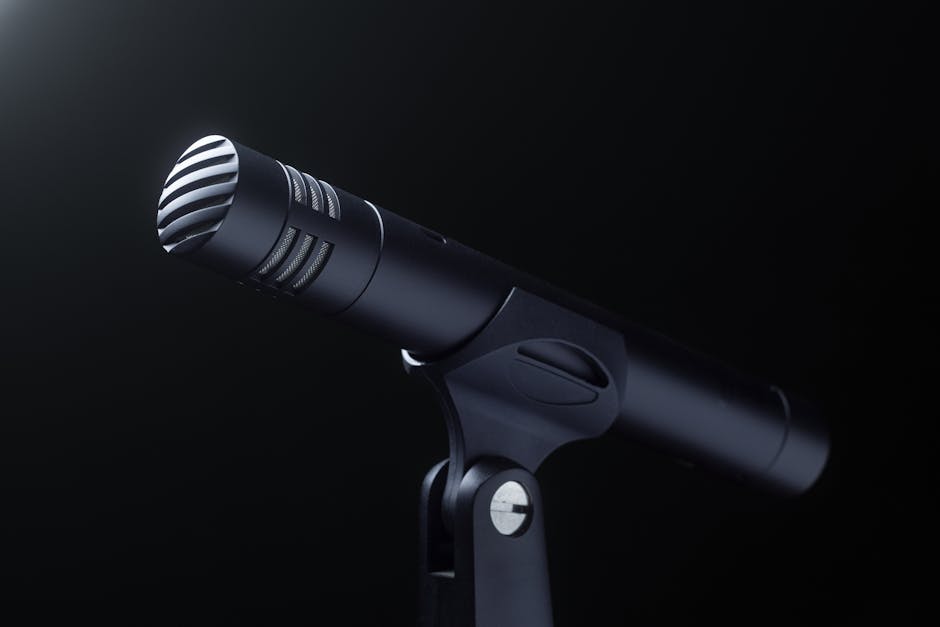
Must-Have Condenser Microphones for High-Quality YouTube Videos
In the competitive landscape of YouTube, exceptional audio quality is no longer a luxury; it’s a necessity. Viewers are increasingly discerning, and a grainy video with crystal-clear sound will always outperform a stunning visual with muffled or noisy dialogue. For creators aiming to elevate their content and captivate their audience, investing in a high-quality condenser microphone is paramount. Condenser microphones, known for their sensitivity and wide frequency response, excel at capturing subtle nuances and detail, making them ideal for spoken word, vocals, and instruments – the staples of many successful YouTube channels.
Choosing the right condenser microphone can feel overwhelming given the vast array of options available. This guide cuts through the noise, focusing on microphones that consistently deliver superior performance, reliability, and value for YouTube creators. We’ll explore microphones suitable for various budgets and recording environments, ensuring you find the perfect audio companion for your creative journey.
Understanding Condenser Microphones for YouTube
Condenser microphones operate on the principle of electrostatic capacitance. They typically require phantom power (usually 48V) to energize their internal circuitry and polarize the capacitor plates. This design allows them to offer a more detailed and accurate reproduction of sound compared to dynamic microphones, which are generally more robust and better suited for high-SPL (Sound Pressure Level) sources or live performance. For YouTube, where clear vocal articulation and rich sonic textures are crucial, the inherent sensitivity and fidelity of condensers are invaluable.
Key Factors to Consider:
- Polar Pattern: This determines the directionality of the microphone.
- Cardioid: Picks up sound primarily from the front, rejecting sound from the sides and rear. This is the most common and often the best choice for solo YouTubers, as it minimizes background noise.
- Omnidirectional: Picks up sound equally from all directions. Useful for capturing the ambiance of a room or multiple speakers in a close proximity, but can also pick up more unwanted noise.
- Bidirectional (Figure-8): Picks up sound from the front and rear, rejecting sound from the sides. Useful for interviews with two people facing each other or for specific creative effects.
- Diaphragm Size:
- Large Diaphragm (typically >1 inch): Generally offers a warmer, more detailed sound with a wider frequency response. Ideal for vocals and instruments.
- Small Diaphragm (typically <1 inch): Often more accurate and transient-responsive, favored for capturing precise details and acoustic instruments. For most YouTube voiceovers and general content, large-diaphragm condensers are preferred.
- Connectivity:
- XLR: The professional standard, requiring an audio interface or mixer. Offers the highest quality signal.
- USB: Connects directly to your computer, simplifying setup and often including a headphone jack for direct monitoring. A great option for beginners or those prioritizing ease of use.
- Noise Floor (Self-Noise): The inherent noise the microphone produces. Lower self-noise is crucial for capturing clean audio, especially in quieter recordings.
- Durability and Build Quality: A well-built microphone will withstand the rigors of regular use and potentially travel.
Top Condenser Microphones for YouTube Creators
1. Rode NT-USB+ (USB)
The Rode NT-USB+ is a perennial favorite for a reason. This USB condenser microphone offers exceptional value, delivering studio-quality sound with plug-and-play simplicity. Its cardioid polar pattern effectively isolates your voice from ambient noise, and the built-in pop filter minimizes plosives. The NT-USB+ boasts a broad frequency response that captures vocal nuances with clarity and warmth. It also features a zero-latency headphone output for real-time monitoring, allowing you to hear exactly what your audience will hear. The robust metal construction ensures durability, and the included tripod desk stand makes setup a breeze. For YouTubers who want to bypass the complexity of audio interfaces and achieve professional results immediately, the NT-USB+ is an outstanding choice. Its ease of use combined with its sonic performance makes it a go-to for countless creators, from vloggers to podcasters and streamers.
2. Audio-Technica AT2020 (XLR)
The Audio-Technica AT2020 is a benchmark for affordable, high-quality XLR condenser microphones. It’s a favorite among aspiring audio engineers and content creators for its impressive clarity and detailed sound reproduction. The AT2020 features a cardioid polar pattern, effectively reducing room noise and focusing on your voice. Its wide dynamic range and high SPL handling make it versatile enough for both spoken word and louder sources. While it requires an audio interface or mixer for phantom power and connection, the investment is well worth the sonic upgrade. The AT2020’s solid build quality and consistent performance have made it a staple in home studios worldwide. It provides a clean, articulate sound that’s perfect for bringing a professional sheen to any YouTube video. For those looking to build a more comprehensive audio setup, the AT2020 is an excellent entry point into the world of professional XLR microphones.
3. Blue Yeti (USB)
The Blue Yeti is arguably one of the most recognizable USB microphones on the market, and for good reason. Its versatility is its key selling point, offering multiple polar patterns (cardioid, bidirectional, omnidirectional, and stereo) all in one unit. This makes it incredibly adaptable for various recording scenarios, from solo voiceovers to interviews and even capturing ambient sounds. The Yeti delivers a clear and present sound that is well-suited for YouTube content. It features a headphone output with volume control for direct monitoring and a microphone mute button for convenience. While its sound may not be as refined as some higher-end dedicated vocal microphones, its all-in-one functionality and ease of use make it an incredibly popular choice for beginners and those who need flexibility. The Yeti’s distinctive design also adds a certain aesthetic to any desk setup.
4. Shure MV7 (USB/XLR Hybrid)
The Shure MV7 is a modern marvel, blending the convenience of USB connectivity with the professional capabilities of XLR. Inspired by the legendary Shure SM7B, the MV7 offers a rich, broadcast-quality sound that is perfect for vocal clarity and presence in YouTube videos. Its cardioid polar pattern is excellent at rejecting background noise, and its touch panel controls allow for easy adjustment of gain, headphone volume, and muting. The ShurePlus MOTIV app provides additional control over EQ, compression, and limiter settings, allowing for further sonic customization. The hybrid connectivity means you can start with a simple USB setup and later upgrade to an XLR setup without replacing your microphone. This future-proofs your investment and offers incredible flexibility for different recording environments. For creators who demand professional sound with user-friendly options, the MV7 is a standout choice.
5. Rode NT1-A (XLR)
The Rode NT1-A is renowned for its incredibly low self-noise, boasting an astonishing 5 dBA. This makes it one of the quietest condenser microphones available, which is crucial for capturing pristine audio, especially in less-than-ideal acoustic environments. Its large-diaphragm cardioid design delivers a smooth, warm, and detailed sound that is highly flattering for vocals. The NT1-A often comes in a “Complete Vocal Recording Solution” package, which includes a shock mount and pop filter, making it an even more compelling value. While it requires an audio interface for phantom power, the clarity and fidelity it offers are exceptional for the price. For YouTubers who prioritize a clean, natural, and detailed vocal sound without any distracting background hiss, the Rode NT1-A is a top-tier option. It’s a microphone that can grow with your channel, providing professional results for years to come.
6. Aston Microphones Spirit (XLR)
Aston Microphones have carved out a niche for themselves by offering unique aesthetics and impressive sonic performance. The Aston Spirit is a multi-pattern condenser microphone (cardioid, omni, and figure-8) that delivers a remarkably smooth and natural sound. Its distinctive sculpted headbasket not only looks striking but also aids in off-axis rejection, further minimizing unwanted room noise. The Spirit is praised for its ability to sound good on a wide variety of sources, making it a versatile choice for YouTubers who might experiment with different content formats. It requires phantom power and an audio interface. The build quality is exceptional, giving it a premium feel. If you’re looking for a microphone that combines stunning design with excellent sonic characteristics and the flexibility of multiple polar patterns, the Aston Spirit is a compelling contender.
Optimizing Your Recording Environment
Even the best microphone will struggle in a poorly treated room. For high-quality YouTube videos, consider these basic acoustic treatments:
- Minimize Echo and Reverb: Record in a space with soft furnishings like carpets, curtains, and upholstered furniture.
- DIY Solutions: Hanging blankets, using acoustic foam panels, or even recording in a closet filled with clothes can significantly reduce room reflections.
- Positioning: Place your microphone correctly. For cardioid mics, speak directly into the front of the capsule. Experiment with distance to find the sweet spot that balances vocal presence with room sound.
Essential Accessories
- Pop Filter/Windscreen: Crucial for reducing plosive sounds (‘p’ and ‘b’ sounds) that can cause jarring pops in your audio.
- Shock Mount: Isolates the microphone from vibrations transmitted through the desk or mic stand, preventing unwanted thumps and rumbles.
- Audio Interface (for XLR mics): Converts the